THE HEALTHY LIVING JOURNAL
How to Make Makeup-Brush Cleaning Part of Your Routine
A practical routine for gently washing makeup brushes, drying them flat, and keeping personal tools ready for use.
General educational information · Sources listed below
Give your tools a place in the routine
A makeup brush may look ready to use while still holding yesterday’s foundation, skin oil, and dust. Cleaning the tool is a separate job from removing makeup from your face. It belongs in the routine even when you use only a small amount of makeup or have a simple collection.
The American Academy of Dermatology recommends washing makeup brushes every seven to ten days. Choosing a regular evening can make that guidance easier to follow. Start with the brushes you actually use, rather than turning the task into a complicated reorganization of every cosmetic you own.
This is an everyday care routine, not a way to diagnose or treat a rash. If makeup use is followed by persistent irritation, breakouts, or eye symptoms, cleaning your brushes should not replace getting appropriate health advice.
Set out a small cleaning station
Gather a bowl, lukewarm water, gentle shampoo, and a clean towel before beginning. Check any care instructions supplied with the brush. Clear a flat place where the brushes can dry undisturbed, and allow enough time that you will not need to use them again immediately.
Keep the brushes separate from open makeup containers while washing. This is also a convenient moment to wash your hands and close the products you have finished using. FDA guidance emphasizes clean hands, closed containers, and following the directions on cosmetics.
For a manageable system, put the used brushes together before starting and move each washed brush to the drying area. That simple distinction helps prevent picking up an unwashed tool by mistake. You do not need a powered cleaning gadget to organize the task.
Wash the bristles gently
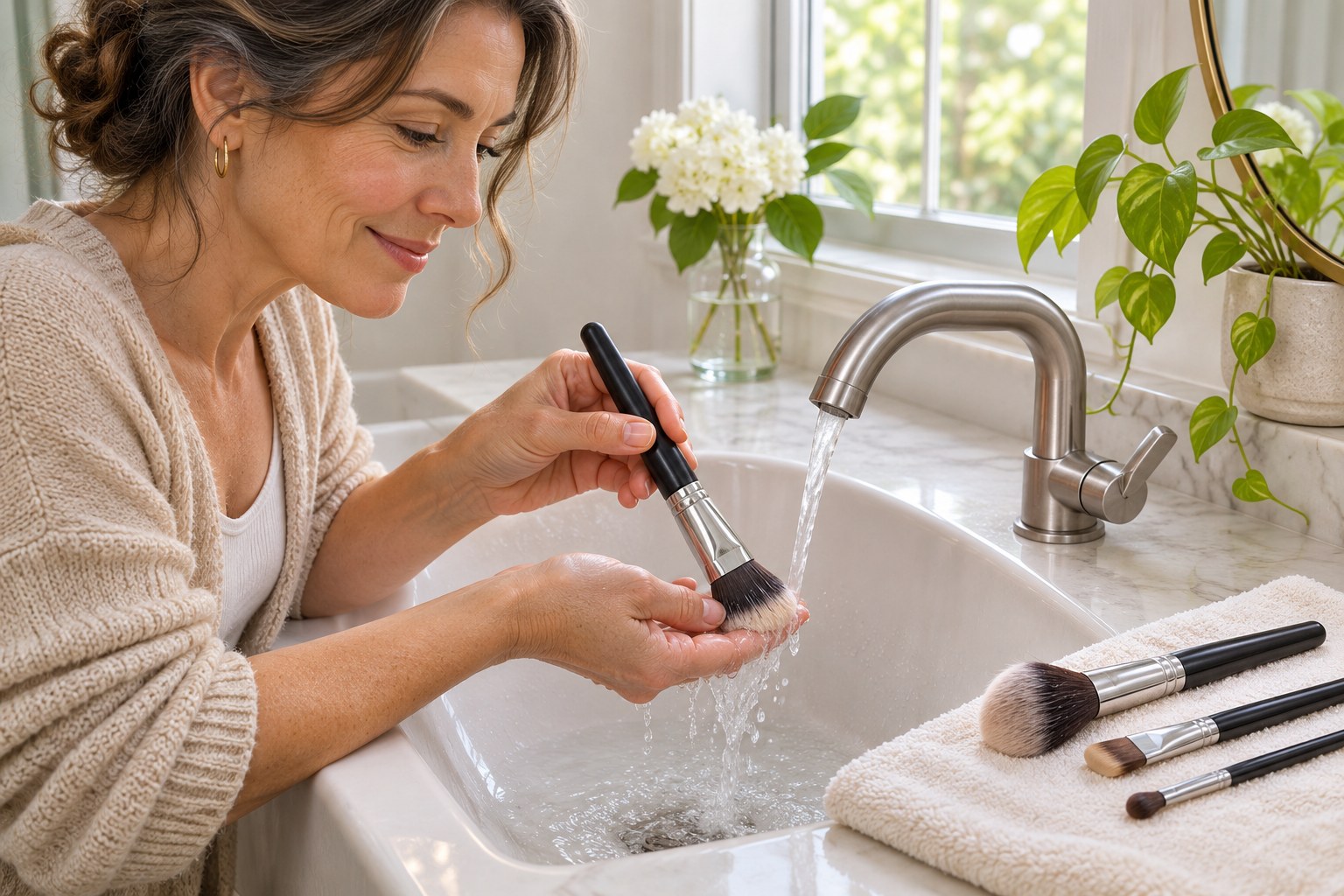
Begin by rinsing the brush tips under lukewarm running water. Keep the junction between the bristles and handle out of the water rather than soaking the whole head. The AAD explains that repeated soaking can affect the adhesive that holds the brush together.
Add gentle shampoo to a bowl of lukewarm water. Swirl the bristle tips in the mixture or gently work them against your palm, then rinse. Repeat until the rinse water looks clear. Use a light touch rather than pulling hard on the bristles or scrubbing them against a rough surface.
After rinsing, remove extra moisture with a clean, dry paper towel. Lay the brushes flat on a towel with their tips extending beyond the counter edge. Avoid drying them upright in a cup: water can run toward the handle and weaken the attachment.
Let drying finish before putting everything away
Choose a drying space where the brushes will not fall into the sink or get splashed again. Cleveland Clinic advises leaving cleaned brushes to dry overnight. Plan the wash around your next use, especially if a dense brush tends to remain damp longer than the smaller ones.
Before returning a brush to its usual place, check its shape and condition. Cleveland Clinic recommends replacing brushes that are frayed, worn, or no longer hold their shape. A brush that is difficult to use because the bristles are damaged does not become new again simply through washing.
Keep your brushes for your own use. Both the AAD and FDA discourage sharing makeup or application tools. A freshly washed brush is not a reason to pass a personal makeup kit around among friends or family.
Keep the habit useful and proportionate
A weekly calendar note can be enough to keep cleaning from slipping out of view. If you miss the planned evening, choose the next practical opportunity rather than abandoning the routine. Keeping fewer everyday brushes in circulation can also make it easier to remember which ones need attention.
Do not assume a skin or eye problem must have come from a dirty brush. FDA advises stopping a cosmetic that causes an unexpected reaction and contacting a healthcare professional. Cleveland Clinic specifically advises calling a doctor for eye pain, drainage, or marked redness after makeup use. Mention the products and tools used, and when symptoms began.
Explore the sources
- AAD: How to clean your makeup brushes ↗
- FDA: Using Cosmetics Safely ↗
- Cleveland Clinic: How To Clean Your Makeup Brushes ↗
Prepared with AI assistance for True Healthy Products LLC. Sources inform this educational guide; their inclusion does not imply endorsement of our company or products. See our editorial approach.