THE HEALTHY LIVING JOURNAL
How to Build a Simple CPAP Equipment Care Routine
Organize manufacturer instructions, washing, drying and replacement checks without relying on extra cleaning gadgets.
General educational information · Sources listed below
A routine built around your equipment
CPAP care can become another task competing for time in the morning. A short, written routine makes it easier to know what needs attention and what can wait. The starting point is the instruction booklet for your machine, mask, tubing and humidifier, rather than a cleaning schedule from a different device or an advertisement.
This guide is for adults already using prescribed CPAP equipment. It focuses on organizing equipment care, not choosing treatment or changing pressure settings. Keep your supplier’s contact details with the instructions so questions about a particular part do not turn into guesswork.
Turn the manual into a small checklist
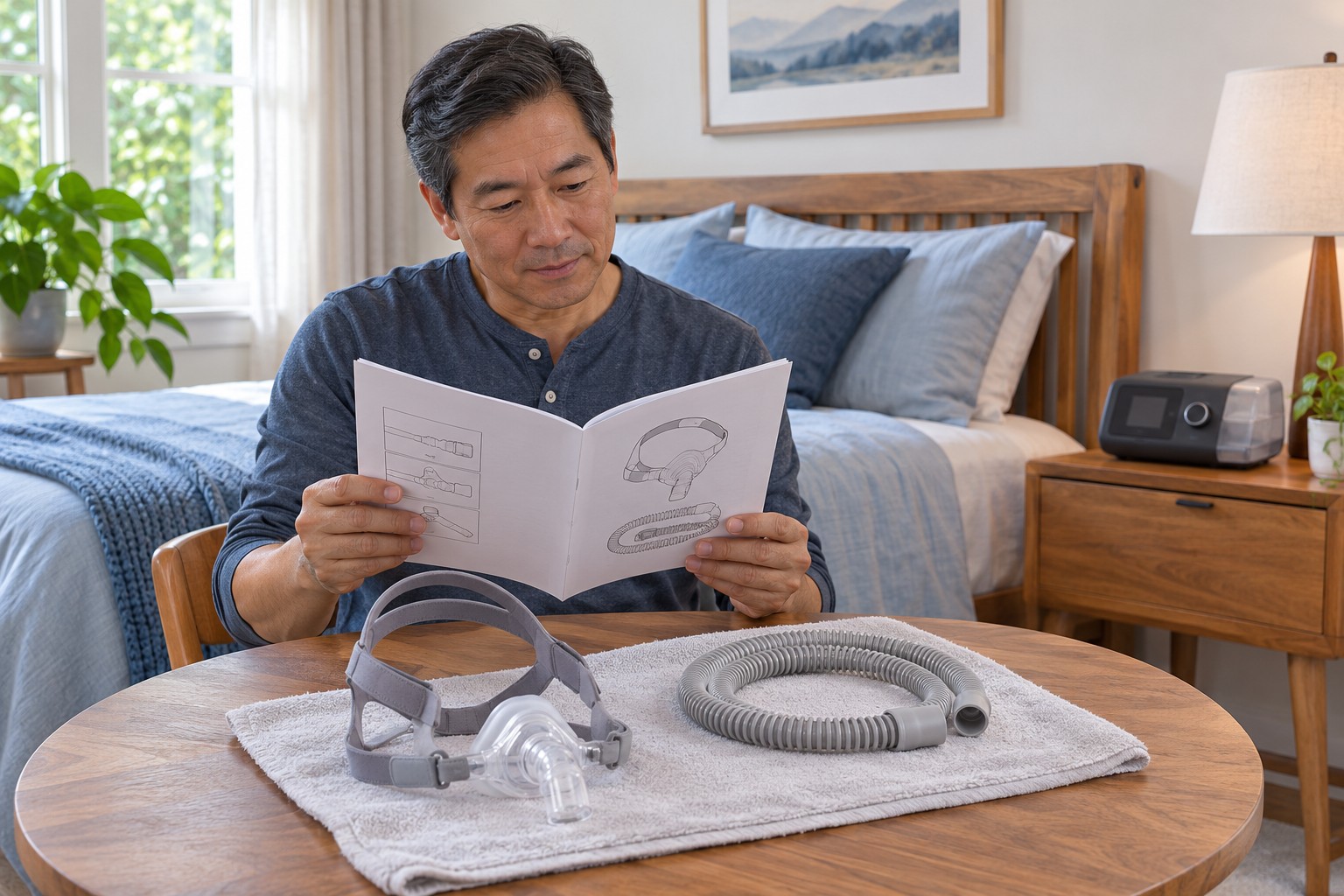
Find the cleaning instructions for each component and note the recommended method and frequency. Separate tasks into the categories your manual uses, such as after each use, weekly care and replacement checks. Different parts may have different requirements; a filter that must be replaced is not interchangeable with one designed to be washed.
Write down the approved cleaning product, where parts should dry and any restrictions on heat or cleaning appliances. Keep this short enough to consult on a busy morning. If the booklet is missing, ask the equipment supplier for the instructions for your exact model before improvising.
Keep washing and drying straightforward
The FDA says mild soap and water are sufficient for most removable CPAP accessories, following the manufacturer’s directions. Rinse washable parts thoroughly and allow them to air dry completely as instructed. A clean drying space helps keep the task organized; avoid putting freshly washed equipment back among used towels or unrelated household items.
The powered machine is different from its detachable accessories. Do not immerse the electrical unit in water. Follow its directions for exterior care and humidifier maintenance. Ask the supplier which parts can be disconnected and washed if the distinction is unclear. Set aside enough time for drying rather than starting a cleaning session just before you need the equipment.
Check claims before buying a cleaning device
A machine advertised as a CPAP cleaner is not automatically necessary. The FDA says an authorized add-on for reducing bacteria does not replace the manufacturer’s regular cleaning process. Check the intended use and authorization of a specific product rather than assuming that all products using similar technology have the same status.
Mayo Clinic Store cautions against harsh cleaners and unapproved ozone or ultraviolet cleaning equipment. Do not add fragrances, essential oils or stronger household products simply because equipment smells stale. A lingering odor is a reason to review rinsing, drying and replacement needs with the supplier, not to cover it with another scent.
Use care time to notice changes
While following your cleaning routine, look for worn straps, damaged tubing, cracks or connections that no longer fit as expected. Keep a brief note of what changed and when. Cleaning cannot repair damaged parts, and a replacement schedule does not mean you should ignore a problem that appears sooner.
It can help to keep the model name, supplier number and next routine supply check in one place. Before travel, review how you will carry the equipment and complete its usual care. A small packing checklist is easier to reuse than rebuilding the plan each time you leave home.
Ask for help when comfort or use changes
NIH advises contacting your healthcare provider about mask leaks, trouble sleeping with the device, dryness, nasal symptoms or other problems that make use difficult. Describe the issue and your current care routine rather than adjusting treatment settings yourself. Persistent equipment odors, unusual noises or alerts also warrant a conversation with the supplier.
Keep scheduled follow-up appointments so your care team can assess how treatment is working. Equipment care is one part of that larger routine. A practical goal is a process you understand, can repeat and can explain when you need help—not a collection of extra cleaning gadgets.
Explore the sources
- FDA: CPAP cleaning devices and equipment care ↗
- NIH NHLBI: Living with sleep apnea ↗
- Mayo Clinic Store: CPAP hygiene ↗
Prepared with AI assistance for True Healthy Products LLC. Sources inform this educational guide; their inclusion does not imply endorsement of our company or products. See our editorial approach.