THE HEALTHY LIVING JOURNAL
Dry Hands After Washing: Gentle Habits That Support Comfort
Maintain hand hygiene while making moisturization and everyday protection easier.
General educational information · Sources listed below
Getting started
Dry hands can turn routine tasks into uncomfortable reminders: opening a jar, washing dishes, or using a keyboard. The solution is not to abandon needed handwashing. Instead, look at what happens during washing, afterward, and throughout the rest of the day. A comfortable routine often depends on accessible products and practical protection rather than an elaborate collection. This article offers general skincare education; persistent cracking, inflammation, or a recurring rash may need a professional assessment rather than another cosmetic purchase.
Keep hygiene and comfort together
AAD emphasizes that handwashing remains important even when the skin feels dry. Its guidance describes ways to reduce dryness while maintaining hygiene. [1] Avoid treating clean hands and comfortable skin as opposing goals. Follow appropriate handwashing guidance for your situation, including workplace rules where they apply. Then make the moisturizing step easy to remember. A product beside the towel may be more useful than an expensive jar stored in a cupboard you rarely open when clearing up after a busy day.
Choose a texture you will use
AAD recommends a fragrance-free, dye-free hand cream or ointment in its hand-care advice. [1,2] Texture affects whether you reach for it. A richer product may fit one time of day, while another texture may be easier when returning to work. There is no need to assume that the most heavily scented or luxurious product is the most suitable. Check the formula description, consider past reactions, and avoid buying many new products at once when you are trying to understand what your skin tolerates.
Apply after washing rather than waiting for discomfort
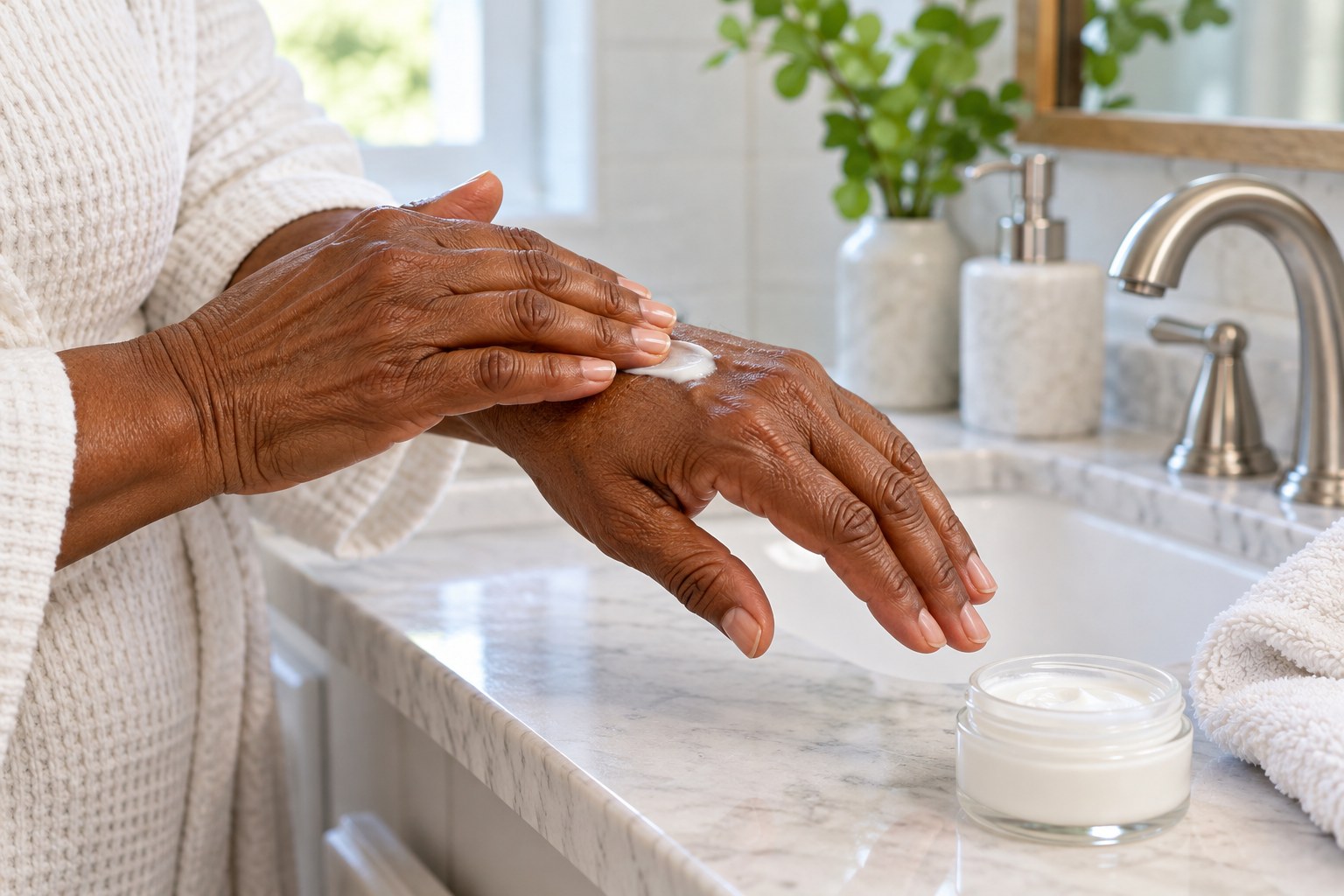
AAD advises moisturizing after handwashing, with skin still slightly damp. [1,2] Pairing those steps can make the habit easier to repeat. Place a suitable product where you wash most often, while keeping containers clean and following their directions. If you carry a small tube, check that it closes securely. The practical goal is not to cover your day in reminders; it is to make a useful step available at the moment you would otherwise forget it and continue with dry, tight skin.
Think about wet household tasks
Dishes, cleaning, and other repeated wet work may deserve a different setup from a quick handwash. Choose suitable protection for the task and avoid exposing skin unnecessarily to cleaning products. If you use gloves, consider comfort, fit, and whether the material itself irritates you. Follow product safety instructions. Do not put a strong cleaning chemical onto bare hands because a cosmetic routine is meant to protect them later. Protection involves what contacts your skin as well as what you apply afterward.
Notice patterns before changing everything
Write down when the discomfort appears. Is it mainly after a particular task, during colder weather, or after a new product? This does not diagnose the cause, but it can help you ask a better question. If you change several cleansers and creams together, it becomes harder to know which change mattered. Begin with a manageable routine and observe it. A product that causes repeated burning or a rash is not made suitable by a natural label, a recommendation from a friend, or a higher price.
Recognize when ordinary dryness may not explain it
AAD distinguishes situations that need dermatology help from routine care. [1] Seek advice for persistent symptoms, significant cracking or bleeding, a rash, or products that repeatedly sting. A general article cannot determine whether you have hand eczema, an allergy, or another condition. Do not repeatedly use stronger exfoliation or unfamiliar treatments on uncomfortable skin because you assume it needs removing. Professional assessment may be more useful than continuing to cycle through products without understanding the problem.
Make the routine fit your real day
Choose a suitable moisturizer, put it where you need it, and identify one task where better protection would help. Ask what makes the habit difficult: greasy feel, an inconvenient container, an empty tube, or uncertainty about products. Adjust that obstacle rather than blaming yourself for inconsistency. AAD's hand-care resources support simple, gentle habits. [1,2] Cosmetic wrinkle products are separate from this care and do not replace hand hygiene or treatment. The aim is a comfortable, repeatable routine and appropriate help when symptoms persist.
Explore the sources
Prepared with AI assistance for True Healthy Products LLC. Sources inform this educational guide; their inclusion does not imply endorsement of our company or products. See our editorial approach.