THE HEALTHY LIVING JOURNAL
How to Eat More Fiber: Simple Food Swaps for Everyday Meals
Learn how to eat more fiber with practical swaps for breakfast, lunch, dinner, and snacks, plus tips for increasing fiber without rushing the change.
General educational information · Sources listed below
Learning how to eat more fiber does not require a new diet or a cupboard full of specialty products. A few changes to meals you already enjoy can give you more variety and make fiber-rich foods easier to eat regularly.
Start with one meal. Add beans to a familiar soup, choose whole-grain toast, or keep fruit ready for a snack. A small change you repeat is more useful than a complete menu overhaul that lasts two days.
What is dietary fiber, and why does it matter?
Fiber is a carbohydrate in plant foods that your body does not fully digest. It supports bowel regularity, and some types help with cholesterol and blood sugar management. Foods often contain a mixture of soluble and insoluble fiber, so you do not need to sort every ingredient into a separate category. [1]
Think in terms of variety: beans, whole grains, vegetables, fruit, nuts, and seeds. Each can contribute something different to your plate.
How much fiber should you aim for?
Your needs vary with age, sex, and energy intake. For comparing packaged foods, the Nutrition Facts label uses a Daily Value of 28 grams on a 2,000-calorie diet. That reference is a label-reading tool, not an individual prescription. [2]
Before setting a target, notice what you currently eat. If most meals contain little produce, beans, or whole grain, adding one of those foods is a useful first step. A dietitian can help tailor your intake if you have a digestive condition or a prescribed eating plan.
Simple high-fiber swaps for breakfast
Keep your usual breakfast format and change one ingredient:
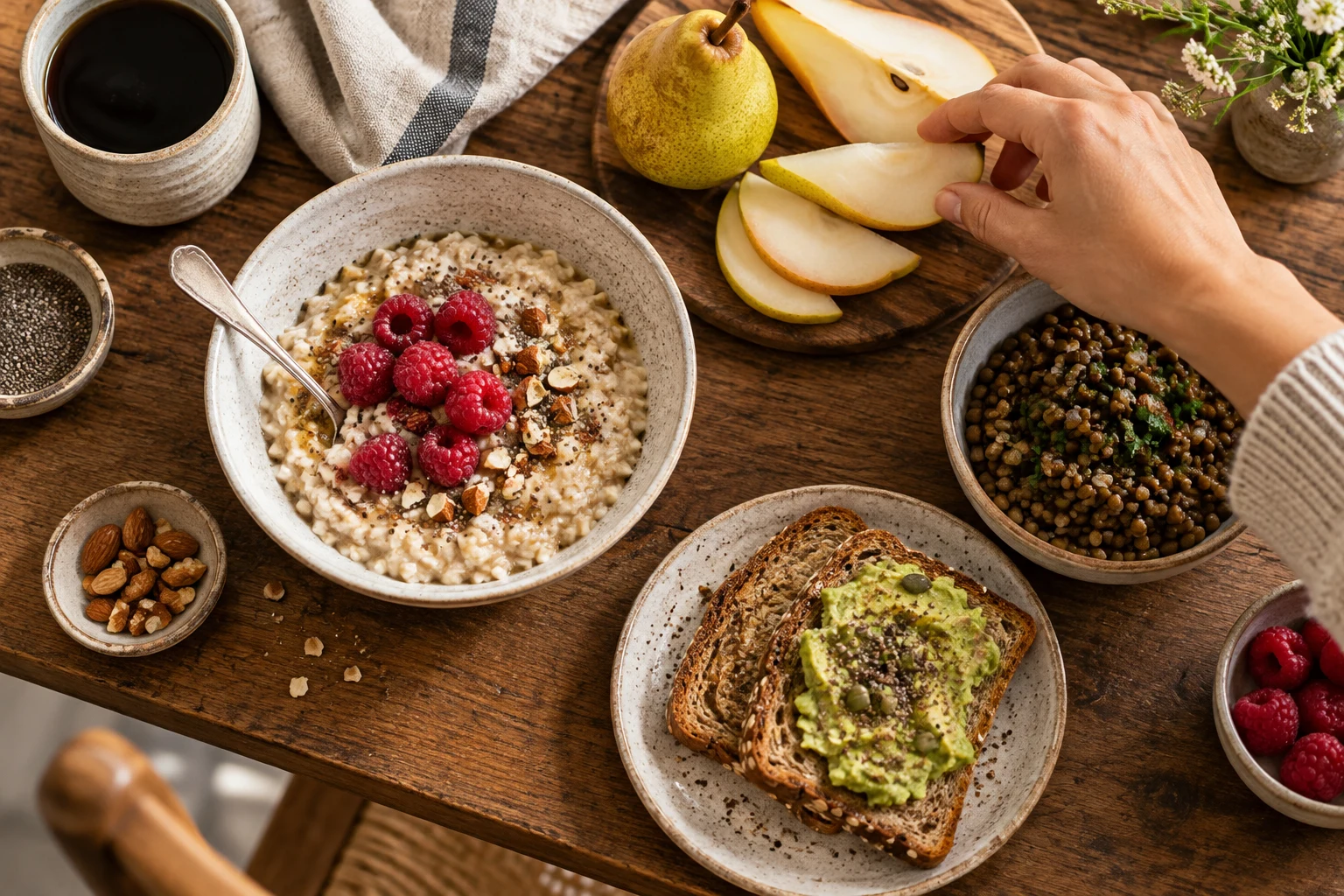
- Replace white toast with a whole-grain version you enjoy. - Add berries or chopped pear to oatmeal or plain yogurt. - Stir a small spoonful of ground flaxseed into oats if you tolerate it. - Compare cereals by fiber per serving rather than front-of-box claims.
If breakfast is usually coffee alone, try a small bowl of oats with fruit. You can build from there instead of starting with a very large portion of bran.
Easy ways to add fiber at lunch and dinner
Use a half-and-half approach when a full substitution changes a favorite meal too much. Mix brown and white rice, or combine regular pasta with a whole-grain variety. Add lentils to a soup you already make.
Familiar meal: Chicken soup; A manageable change: Add white beans and an extra vegetable
Familiar meal: Rice bowl; A manageable change: Replace some rice with beans
Familiar meal: Pasta dinner; A manageable change: Add peas, broccoli, or lentils
Familiar meal: Sandwich; A manageable change: Choose whole-grain bread and add vegetables
Frozen vegetables and canned beans can make these ideas practical on busy nights. Rinse canned beans if you want to reduce some of the sodium.
Choose snacks that contribute fiber
A whole apple, a small handful of nuts, or vegetables with hummus can fit between meals. Pick something you actually like and keep it easy to reach. You do not need to choose a product labeled “high fiber” every time you eat.
When comparing packaged snacks, check both serving size and fiber grams. A large-looking number may refer to more food than you intend to eat. [2]
Increase fiber gradually and pay attention to comfort
Adding a lot at once can cause gas and bloating. Introduce one change, give yourself time to adjust, and drink fluids regularly. Follow any fluid restriction your clinician has prescribed. [1,3]
If you have been told to follow a low-fiber diet, do not replace it with this general advice. Persistent abdominal pain, blood in stool, or a lasting change in bowel habits deserves medical attention.
Do you need a fiber supplement?
Not automatically. Food provides nutrients and variety alongside fiber. Supplements can have a role when a clinician recommends one, but they are not interchangeable with a varied eating pattern. [3]
For this week, choose one specific step: oats on two mornings, beans in one dinner, or whole fruit at your afternoon break. Once it feels ordinary, add another.
Explore the sources
- CDC: Fiber ↗
- FDA: Dietary Fiber on the Nutrition Facts Label ↗
- NIDDK: Eating, Diet, and Nutrition for Constipation ↗
Prepared with AI assistance for True Healthy Products LLC. Sources inform this educational guide; their inclusion does not imply endorsement of our company or products. See our editorial approach.