THE HEALTHY LIVING JOURNAL
Indoor Walking Ideas for Days When You Cannot Get Outside
Build a comfortable indoor walking option with a clear route, a manageable pace, and realistic ways to fit movement around the day.
General educational information · Sources listed below
Have an indoor option ready
Rain, heat, poor air quality, or a difficult schedule can interrupt an outdoor walk. Having an indoor option makes the decision easier: you can adapt the setting instead of treating the entire day as a missed opportunity. The goal is movement you can do comfortably and safely.
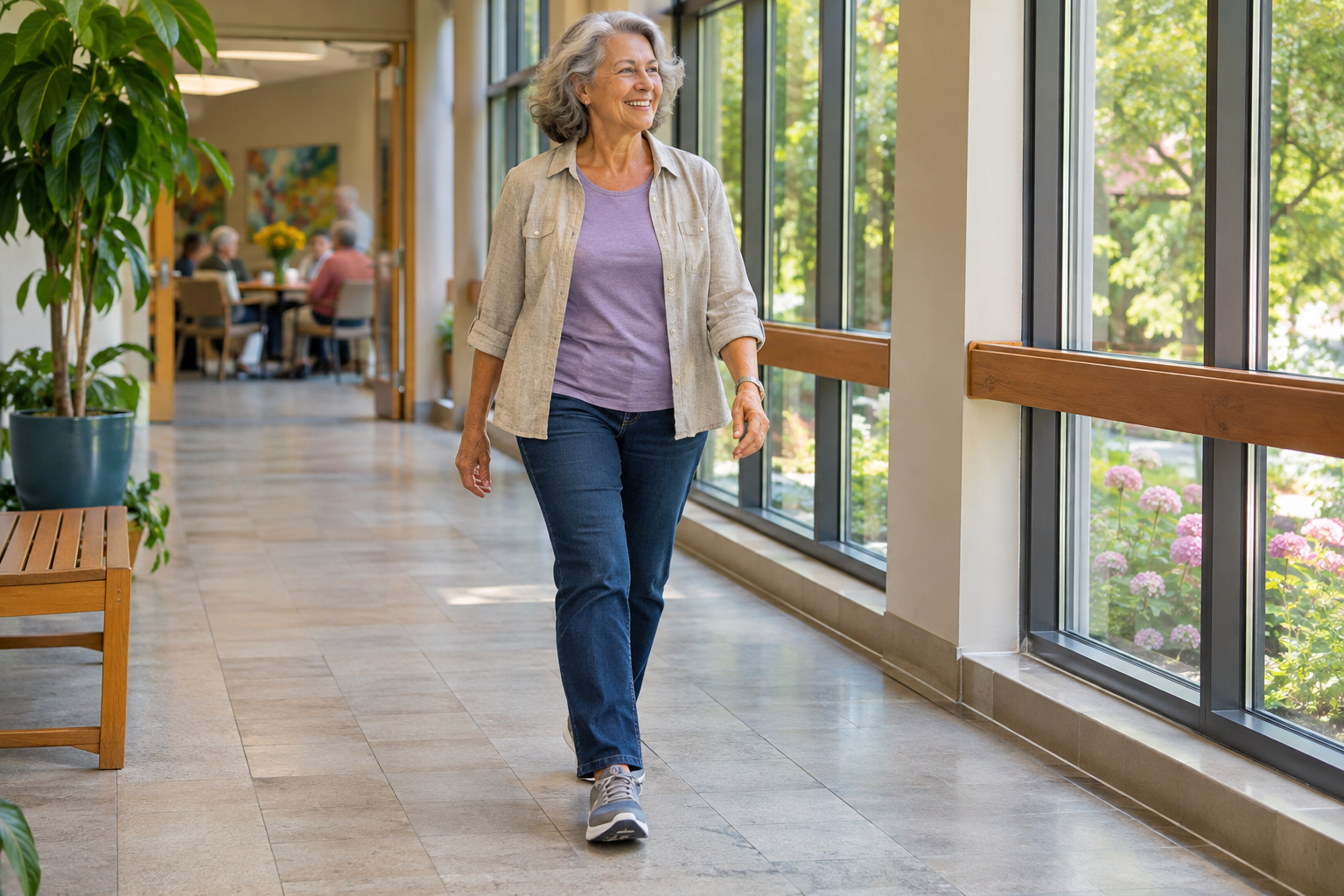
An indoor walk does not need to imitate every feature of an outdoor route. A clear hallway, a community center, or another suitable public space can provide a practical alternative. Choose a place you can access consistently, with permission where needed and enough room for the way you move.
Check the route before starting
Look for loose rugs, cords, clutter, wet floors, and narrow turns. Choose a stable surface and footwear that feels secure. A route that requires stepping around furniture every few seconds may be less useful than a shorter, simpler stretch of clear floor.
If you use a cane, walker, or another mobility aid, include it in the plan. Do not put support aside just because a walking video shows people without it. A clinician or physical therapist can help adapt movement when balance, pain, or a recent health change makes the setup uncertain. [1]
Begin with a modest amount
You can start with a short period that fits your current ability and build gradually. Public-health guidance emphasizes that some activity is better than none and that weekly activity can be accumulated in smaller portions. You do not need to complete a long uninterrupted session to begin. [2]
For example, someone who is comfortable walking might choose a few easy laps before lunch. Someone returning after a break may begin with less. Use your own starting point rather than another person's step count, speed, or video length as the entry requirement.
Let effort guide the pace
Indoor walking can be light or more demanding depending on pace and personal fitness. At moderate intensity, people can generally talk but not sing comfortably. Use that general guide alongside how you feel, rather than assuming that every walk automatically reaches the same effort level. [3]
Keep turns controlled and avoid speeding up simply to make a small room feel like a workout. If the space limits your stride, choose a different route or easier movement. Safe, repeatable activity is more useful than trying to force a pace that does not suit the surroundings.
Use ordinary routines as reminders
Attach a short walk to something already in the day: a break between tasks, an afternoon phone call when safe, or the time before preparing dinner. The reminder should help you begin without needing a new device or a complicated scheduling system.
Keep the plan flexible. If a public building is crowded or closed, have a second option. If you share a home, choose a route and time that do not create obstacles for someone else. A simple backup can reduce the number of decisions required on a busy day.
Include other kinds of activity too
Walking supports aerobic movement, but a balanced routine also includes appropriate muscle-strengthening activity. Older adults benefit from including balance work as well. An indoor walking habit can sit alongside these activities rather than being expected to replace them all. [2]
You might keep walking and strength practice on separate parts of the day if that is easier. The exact combination should fit your abilities, health, and preferences. Adapted or seated options may be useful when standing movement is limited; ask a qualified professional about a suitable plan.
Notice symptoms and adjust
Stop if you develop pain, dizziness, chest discomfort, or unusual breathlessness, and seek appropriate care for concerning symptoms. If walking repeatedly causes a problem, investigate it rather than trying to solve everything by choosing a different pair of shoes or a longer warm-up. [1]
For your next disrupted outdoor-walking day, use one prepared indoor route and a manageable goal. Afterward, consider whether the space, timing, and effort worked. That information helps turn an occasional substitute into a reliable option you can return to when conditions change.
Explore the sources
- NIDDK: Staying Active at Any Size ↗
- CDC: Adult Physical Activity ↗
- CDC: Measuring Activity Intensity ↗
Prepared with AI assistance for True Healthy Products LLC. Sources inform this educational guide; their inclusion does not imply endorsement of our company or products. See our editorial approach.