THE HEALTHY LIVING JOURNAL
What to Do After a Minor Kitchen Burn
Learn how to cool and cover a small kitchen burn, and which signs mean it needs urgent medical care.
General educational information · Sources listed below
Get away from the heat and cool the skin
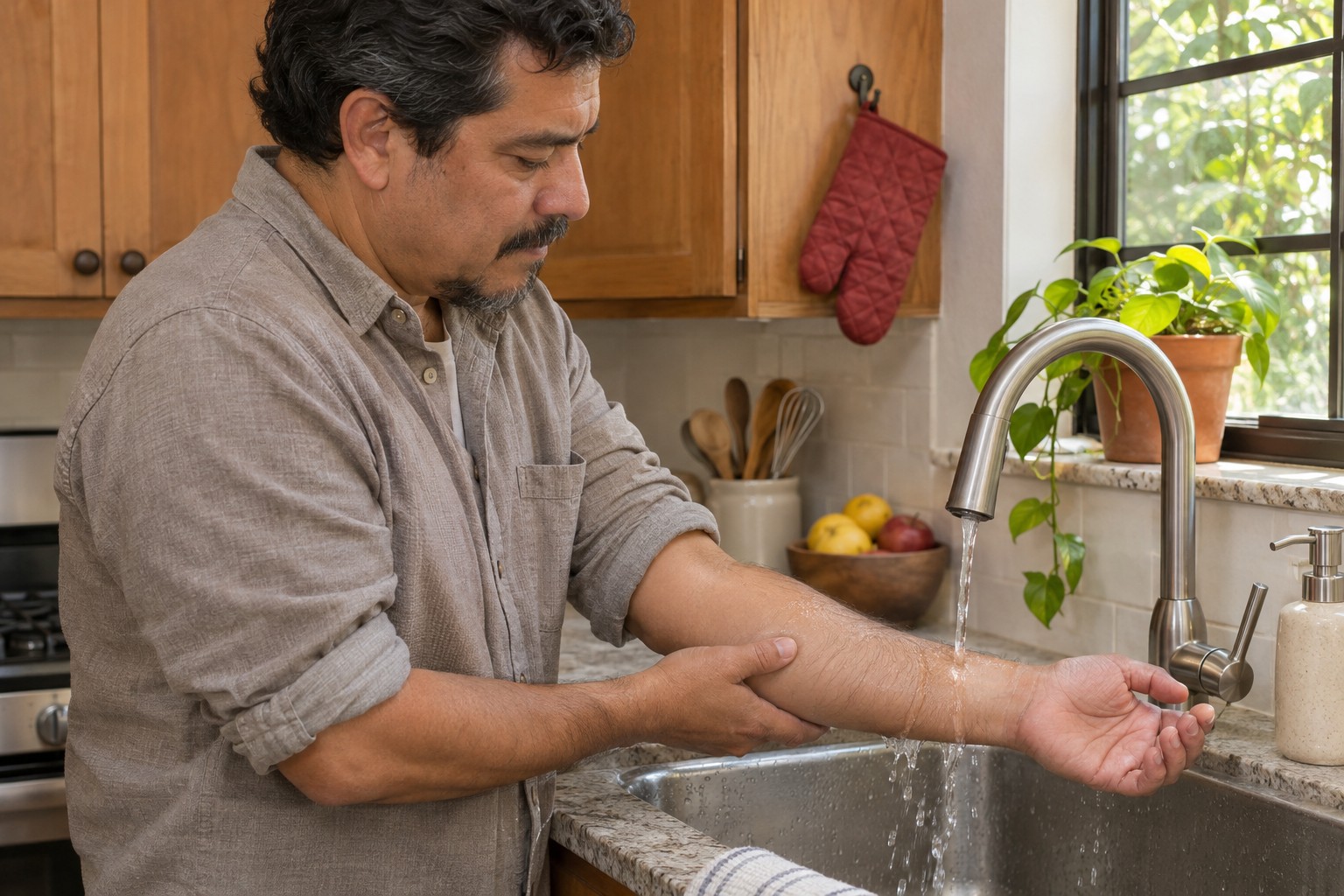
A forearm can brush an oven rack or catch a splash of hot water in a second. Before looking for a bandage, step away from the heat and make sure the kitchen is safe. For a small, shallow burn from a hot surface or liquid, the first step is to cool the area. Mayo Clinic recommends running cool tap water over a minor burn for about 10 minutes.
If the area is awkward to hold under the faucet, a clean cloth soaked in cool water can help cool it. Rewet the cloth as it warms. Use cool water instead of putting ice on the skin. While you cool the area, gently remove nearby rings, watches or other tight items if they come off easily. Swelling can make them harder to remove later. Leave fabric that is stuck to the skin in place and seek medical help.
A small surface burn may feel sore, look red or have mild swelling. You may still be unsure how deep the injury is, especially right away. Notice the size, where it landed and what caused it. Those details help when you need advice about whether care at home is appropriate.
Cover the area after cooling
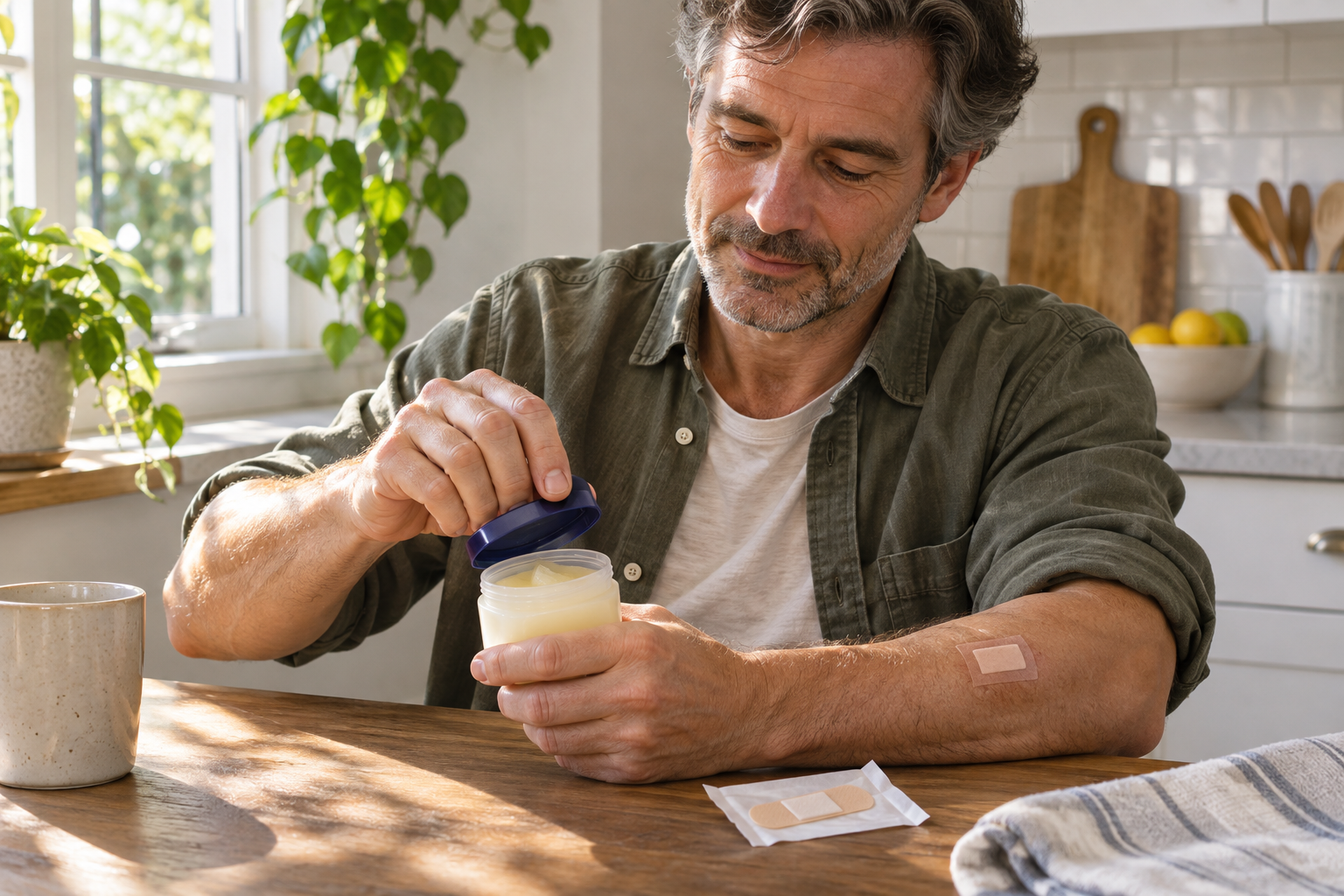
Once the skin is cool, protect it from rubbing on clothes or brushing against kitchen surfaces. The American Academy of Dermatology recommends a sterile nonstick bandage for a shallow burn. Keep the covering loose. If you are reaching into the first-aid kit, look for a pad marked nonstick, so it can sit over the sore spot without gripping the injured skin.
Leave any blister intact. A blister provides a barrier, and piercing it opens the skin. Butter and toothpaste are sometimes suggested as kitchen remedies, but they can irritate the area or contribute to infection. Keep the first steps simple. Cooling and a clean covering are more useful than searching the pantry for something to put on the burn.
If a blister breaks or the area begins to look worse, check with a healthcare professional for advice. Watch for increasing pain, spreading redness or drainage. Once the skin has healed, protecting it from the sun with clothing or shade can help limit lasting discoloration, according to the dermatology academy.
Recognize when a kitchen burn needs urgent care
Mayo Clinic recommends emergency care for burns that look deep, dry or leathery, have charred or discolored patches, or are larger than about three inches across. A burn that wraps around an arm or leg, rapidly swells or occurs with smoke inhalation also needs emergency care. For a serious burn or trouble breathing after smoke exposure, call 911.
Location matters. Burns to the face, hands, feet, genitals or over a major joint can need urgent assessment. Babies and older adults may need medical attention even for burns that look minor. Electrical and strong chemical burns require emergency evaluation. If the depth or severity is unclear, contact a healthcare professional instead of relying on appearance alone.
Make the next response easier
Keep clean nonstick pads and a loose roll of gauze where you can find them without rummaging. If someone else is nearby when a burn happens, they can make sure the stove is off and bring the first-aid supplies while you cool the skin. If a clinician needs to assess the injury, be ready to say whether it came from steam, hot liquid or contact with a pan, and how long you cooled it.
The next time you take a heavy pan out of the oven, clear a landing spot and have dry oven mitts ready. For a small burn that still happens, remember the order: move away from the heat, cool the skin, cover it loosely, and get help if its size, location or appearance raises concern.
Explore the sources
- American Academy of Dermatology — How to treat a first-degree, minor burn ↗
- Mayo Clinic — Burns: First aid ↗
Prepared with AI assistance for True Healthy Products LLC. Sources inform this educational guide; their inclusion does not imply endorsement of our company or products. See our editorial approach.