THE HEALTHY LIVING JOURNAL
How to Practice Gentle Seated Ankle Mobility
Set up a stable chair and practice slowly pointing and flexing your feet with comfort and control.
General educational information · Sources listed below
A small movement to practice while seated
Ankle mobility is easy to overlook until you pay attention to how your feet move. A gentle seated exercise gives you a chance to practice pointing and flexing the foot with your body supported. It can fit into a quiet moment at home and requires little equipment beyond a suitable chair.
This guide focuses on a comfortable introduction for adults who can sit securely and move their ankles without pain. Choose a time when you can concentrate on the movement instead of squeezing it in while doing something distracting. A few controlled movements give you more useful feedback than rushing through a long sequence.
If you have a recent injury, surgery, unexplained ankle symptoms, or instructions limiting movement, check with your health professional before trying a new exercise. Someone who knows your circumstances can help you decide whether this general activity fits your situation.
Set up a steady place to sit
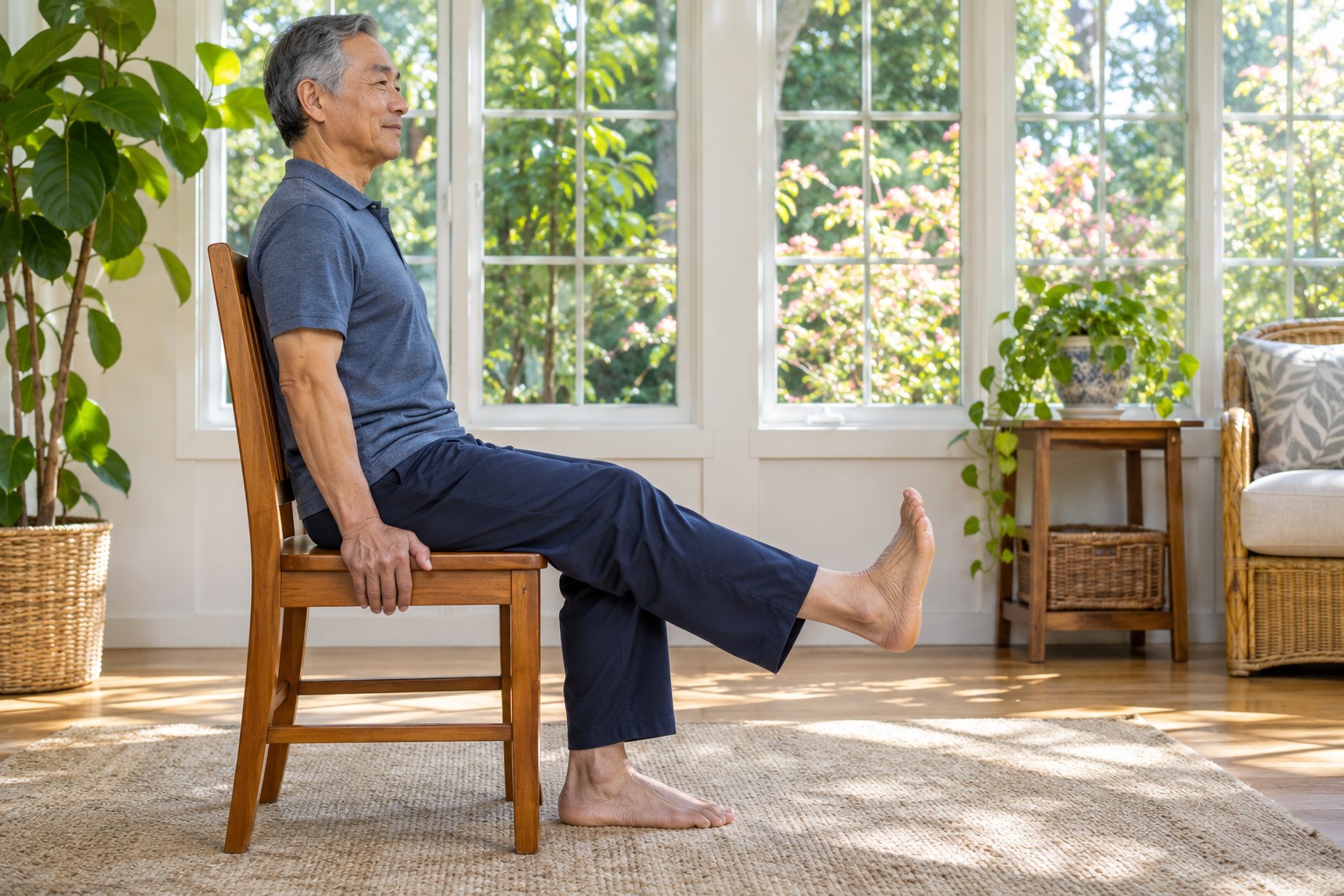
Choose a firm, stable chair with no wheels. Your feet should rest on the floor when you sit, with your knees bent comfortably. The NHS recommends a chair without arms for its sitting exercise routine. Place the chair where it will stay steady and leave enough room in front for a gently extended leg.
Move bags, cords, and loose rugs away from the space. Wear comfortable clothing that allows your knee and ankle to move freely. Keep anything you need within reach so you can stay settled. If the chair feels too high, too low, or unstable, change the setup before beginning.
Point and flex the foot with control
Sit upright and hold the sides of the chair. Following the NHS ankle exercise, extend one leg so the foot is raised from the floor. Slowly point the toes away, then bring them back toward you. Let the ankle create the movement while the rest of your body stays comfortably supported.
Bring the foot back down with control and try the other side. Start with a small amount that feels manageable, allowing time to notice the movement. Avoid forcing the toes farther, holding your breath, or leaning backward to get extra range. If keeping the leg raised feels difficult, pause and seek advice about a suitable adjustment.
Use comfort as your guide
Move slowly enough to stop at any point. The American Heart Association advises smooth, comfortable stretching and normal breathing. Sharp pain, stabbing discomfort, or joint pain is a reason to stop. Do not bounce the foot or push through discomfort to match a picture or another person's movement.
Pay attention to what happens during the activity and afterward. If you notice new pain, swelling, or other concerning symptoms, stop and get appropriate medical advice. A general exercise guide cannot determine the cause of symptoms or provide a rehabilitation plan for an injured ankle.
Make the habit easy to remember
Pick a simple cue, such as finishing a short walk or settling into a chair before reading. Leave enough time to arrange your chair and focus on each foot. You could make a brief note that you practiced and whether it felt comfortable. There is no need to record angles or compare one day's range with another.
Ankle mobility can be one small part of a varied activity routine. The American Heart Association describes flexibility alongside strength, balance, and endurance as parts of fitness. Keep opportunities for other suitable movement in your week. The aim here is a repeatable, comfortable practice that helps you pay attention to how your ankles move.
Before your next session, take a moment to check the same basic details again. Is the chair steady, is the floor clear, and can you sit comfortably? Repeating that setup makes the activity easier to approach calmly. If something feels different from your usual experience, give yourself time to pause instead of automatically continuing through the movement.
Explore the sources
Prepared with AI assistance for True Healthy Products LLC. Sources inform this educational guide; their inclusion does not imply endorsement of our company or products. See our editorial approach.