THE HEALTHY LIVING JOURNAL
How to Store Leftovers Safely and Waste Less Food
A practical refrigerator routine for portioning, labeling, and using cooked food.
General educational information · Sources listed below
Getting started
Leftovers can make tomorrow's meal easier, but saving food only helps when it is handled safely. A container at the back of the refrigerator is not a plan by itself. Think about the journey from the dinner table to storage and then to your next meal. A few small decisions made while clearing up can reduce uncertainty later, especially when several people share a kitchen and nobody remembers who put something away.
Put the temperature rules first
FDA recommends keeping the refrigerator at or below 40 degrees Fahrenheit and the freezer at 0 degrees. An appliance thermometer makes checking easier than guessing from how cold a shelf feels. Perishable food generally needs refrigeration within two hours, or within one hour when the surrounding temperature is above 90 degrees. These are safety limits, not targets for leaving dinner on the counter. Put food away promptly rather than waiting until bedtime. [1]
Make the next serving easy to find
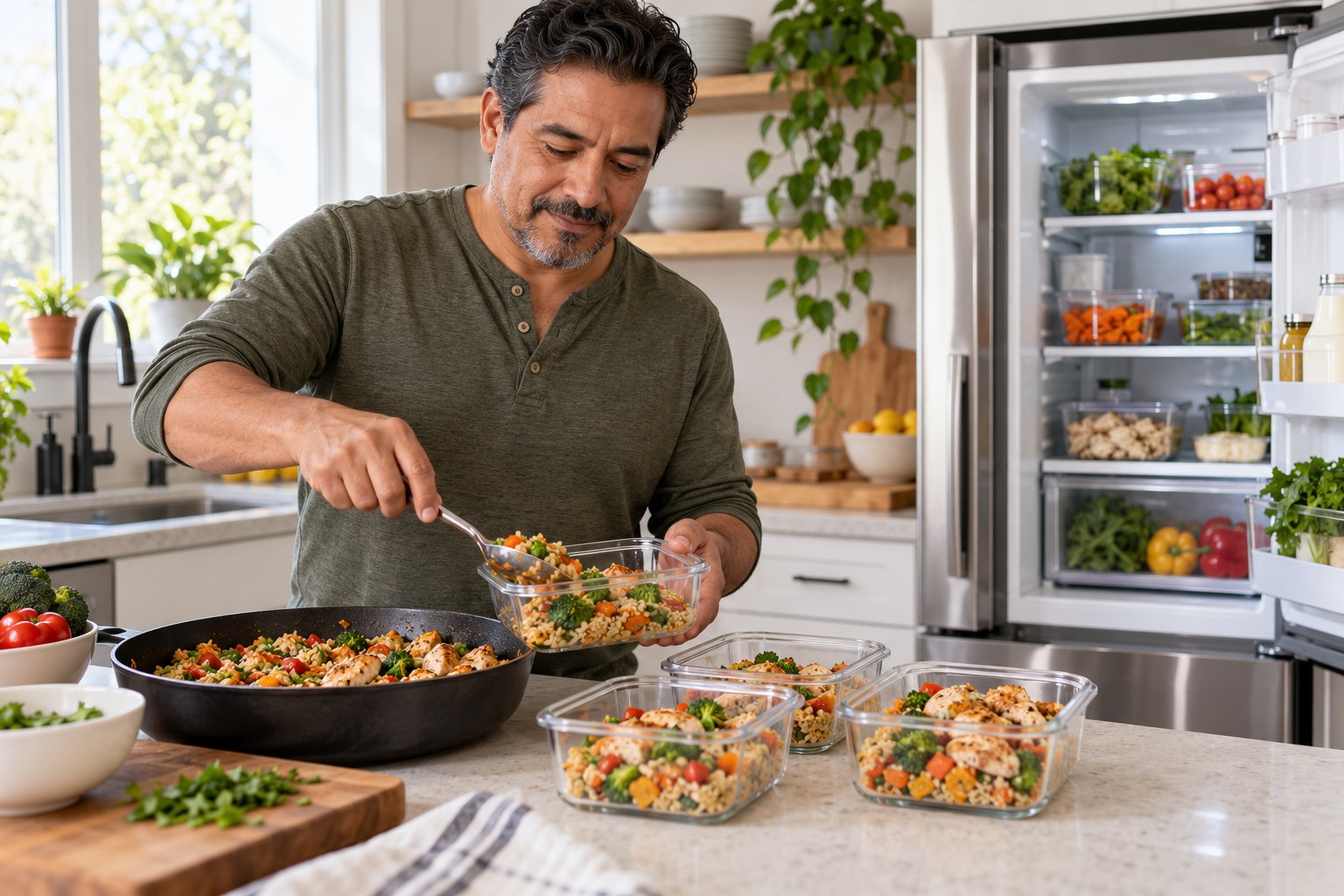
Before packing a meal away, decide whether you expect to eat it soon or freeze it. Divide a large amount among smaller containers so cooling is more manageable. Choose containers that stack securely and are easy to open. A lunch-sized portion is often simpler to use than a heavy dish holding several meals. Keep the storage choice practical for your household rather than buying a complicated set that makes cleanup feel like another project.
Label the food before memory fades
Write the food name and the date it was prepared on a removable label. The label does not extend safe storage time, but it helps you make informed decisions. If one person cooks and another packs lunches, agree on what the date means. Avoid moving an older meal into a new container and giving it today's date. Make a separate note of what needs using next so that useful food stays visible instead of disappearing behind new groceries.
Leave room for cold air
A packed refrigerator can be difficult to organize and can restrict air circulation. FDA advises against overpacking and recommends covered containers or sealed storage bags. Keep raw-food drips away from ready-to-eat items, and wipe spills promptly. [1,2] One useful housekeeping step is to clear a small, visible space for meals that need attention. This is an organizational aid, not a special refrigerator zone with a different temperature or a guarantee that every item there remains safe.
Match storage time to the actual food
There is no single refrigerator deadline that fits every ingredient. Use the FoodKeeper resource linked by FDA to check appropriate storage information for the food in question. Do not use the smell test as proof of safety, and do not taste questionable food to investigate it. If you cannot establish how it was stored, discarding it may be the safer choice. Saving money matters, but it should not require taking a chance with uncertain handling. [2]
Plan one leftovers meal before shopping
Look in the refrigerator before writing the next grocery list. Perhaps cooked vegetables can accompany a fresh meal, or a suitable frozen portion can cover a busy evening. Keep an inventory short enough that you will actually maintain it. A note saying what is available and where it is stored can be enough. This planning example is about convenience; it does not change the storage requirements of the ingredients or make unsafe food usable again.
Build a routine everyone can follow
Try a simple sequence after dinner: portion, refrigerate promptly, label, and make a plan to use or freeze the food. Check your appliance thermometer regularly and review storage guidance when a food is unfamiliar. FDA's food-waste advice emphasizes that reducing waste and protecting safety belong together. [2] Start with the meal you cook most often, notice which step gets missed, and adjust that step. General food-safety education cannot assess a particular meal whose handling history is unknown.
Explore the sources
Prepared with AI assistance for True Healthy Products LLC. Sources inform this educational guide; their inclusion does not imply endorsement of our company or products. See our editorial approach.