THE HEALTHY LIVING JOURNAL
Supplement Quality Seals: What They Do and Do Not Tell You
Separate manufacturing checks from evidence that a supplement is right for you.
General educational information · Sources listed below
Getting started
A quality seal on a supplement bottle can look reassuring, particularly when several products make similar claims. It can be useful information, but it answers a narrower question than many shoppers expect. Manufacturing quality, evidence of benefit, and suitability for your health are different issues. Before paying extra for a badge or a premium label, take a moment to work out which question you are trying to answer and which information would actually help you make the decision.
Separate quality from effectiveness
NIH explains that independent quality testing may check manufacturing, listed ingredients, and harmful levels of contaminants. A quality seal does not guarantee that the supplement is safe or effective. [1] That distinction matters even when a product contains exactly what its label says. A correctly made product can still be unnecessary for you, unsuitable with a medicine, or supported by limited evidence for the benefit you want. Treat the seal as one piece of information rather than a complete recommendation.
Find out what the specific seal covers
Instead of assuming all badges mean the same thing, identify the organization behind the mark. Check its own explanation of the program and, when available, its product directory. Look for the exact product name and form rather than only the manufacturer. A vague phrase such as quality checked is less informative than a clearly described independent process. Do not infer that a testing organization endorses every health claim printed on the package or every other product sold by that brand.
Understand FDA's role
FDA does not approve dietary supplements for safety before they reach the market in the way it approves medicines for their intended uses. Manufacturers and distributors have responsibilities for lawful, safe products, and FDA has enforcement authority. The agency also does not routinely test every supplement before sale. [2] Consequently, a statement that a product is made in a facility connected with FDA oversight should not be read as proof that FDA has approved the finished supplement or its advertised benefits.
Read the product beneath the badge
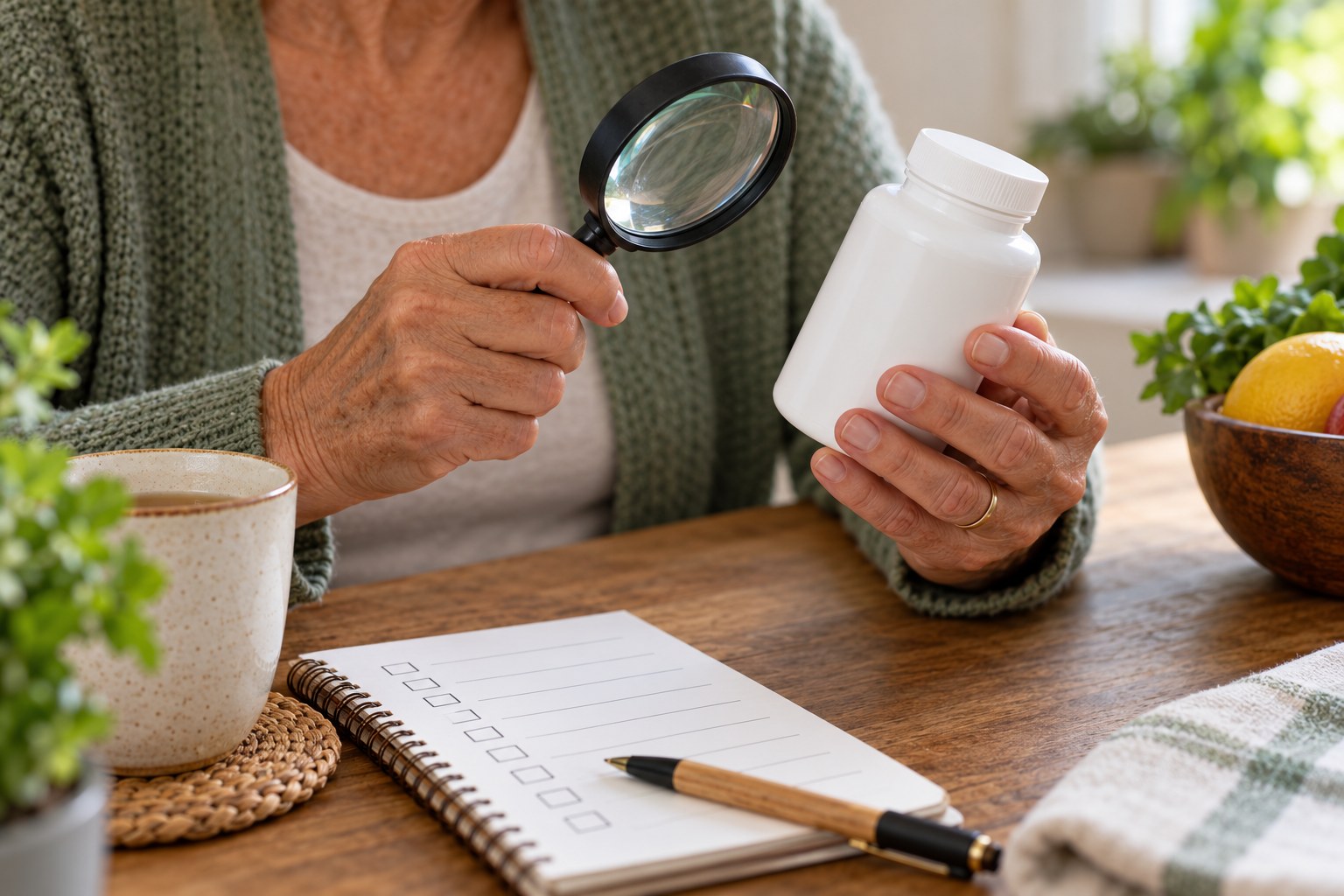
Turn the bottle around and inspect the Supplement Facts panel. Note the serving size, ingredient amounts, other ingredients, and any warnings. A front label may emphasize a large number while a serving requires several capsules. Keep the comparison on the same basis when looking at alternatives. If a pharmacist or clinician has recommended a specific ingredient, bring the actual product information to the discussion. A familiar brand name alone does not identify the formula, serving, or combination you are considering.
Ask whether the promised outcome is supported
A manufacturing test does not show that a supplement improves sleep, energy, concentration, or another outcome. Ask what evidence relates to the exact claim and whether it applies to people like you. NIH notes that supplements can have benefits in some circumstances while also carrying risks. [1] Avoid using a seal as a shortcut around that uncertainty. A smaller promise supported by relevant evidence is more useful than an impressive list of benefits that nobody can explain clearly.
Prepare a useful professional conversation
Make a short list of medicines, vitamins, and other supplements you already take. Include over-the-counter products and the reason you are considering the new supplement. Show the label or a clear photograph to a pharmacist or qualified healthcare professional. Ask about interactions, duplication, and whether the hoped-for benefit calls for an assessment first. This article does not recommend a dose or a product. Individual circumstances can change what is appropriate, even when a supplement is available without a prescription.
Make the buying decision less rushed
Compare the purpose, label information, verification details, and cost before buying. Save the exact product name if you decide to discuss it later. You can also decide not to purchase anything while questions remain unanswered. True Healthy Products LLC currently markets EuZen, not dietary supplements; this discussion is general consumer education. A thoughtful purchase starts by separating what a seal verifies from what it cannot tell you, then considering your own needs with appropriate professional guidance.
Explore the sources
- NIH ODS: Dietary Supplements—What You Need to Know ↗
- FDA: Questions and Answers on Dietary Supplements ↗
Prepared with AI assistance for True Healthy Products LLC. Sources inform this educational guide; their inclusion does not imply endorsement of our company or products. See our editorial approach.