THE HEALTHY LIVING JOURNAL
How to Practice a Supported One-Leg Stand
Use reliable support and controlled movement to explore a simple balance exercise.
General educational information · Sources listed below
Make support part of the exercise
Standing on one leg can sound like a test you either pass or fail. For a beginner, it is more useful to treat it as a small movement to practice with reliable support. A wall or sturdy chair gives you somewhere to steady yourself while you learn what a controlled weight shift feels like. You do not need to prove that you can balance without help.
Balance matters during ordinary activities such as walking and using stairs. The American Heart Association includes balance alongside endurance, strength, and flexibility in a varied activity routine. This guide describes a supported starting point for adults who can stand comfortably. If you have fallen, feel unsteady, or are unsure whether standing practice is appropriate, ask a health professional about a suitable starting level.
Prepare a clear, steady space
Choose a level area with enough room to put both feet down easily. Move loose objects out of the way and keep pets from passing between you and your support. Use a stable chair that will not roll or slide, or face a wall within comfortable reach. Avoid practicing beside hot cooking equipment or while carrying something.
Wear clothing that lets you move freely. Give the exercise your attention rather than adding it to a distracting task. Before lifting a foot, stand with both feet on the floor and check that you can reach the support without leaning far forward. If the setup feels uncertain, change the space or get help before continuing.
Shift gently and return with control
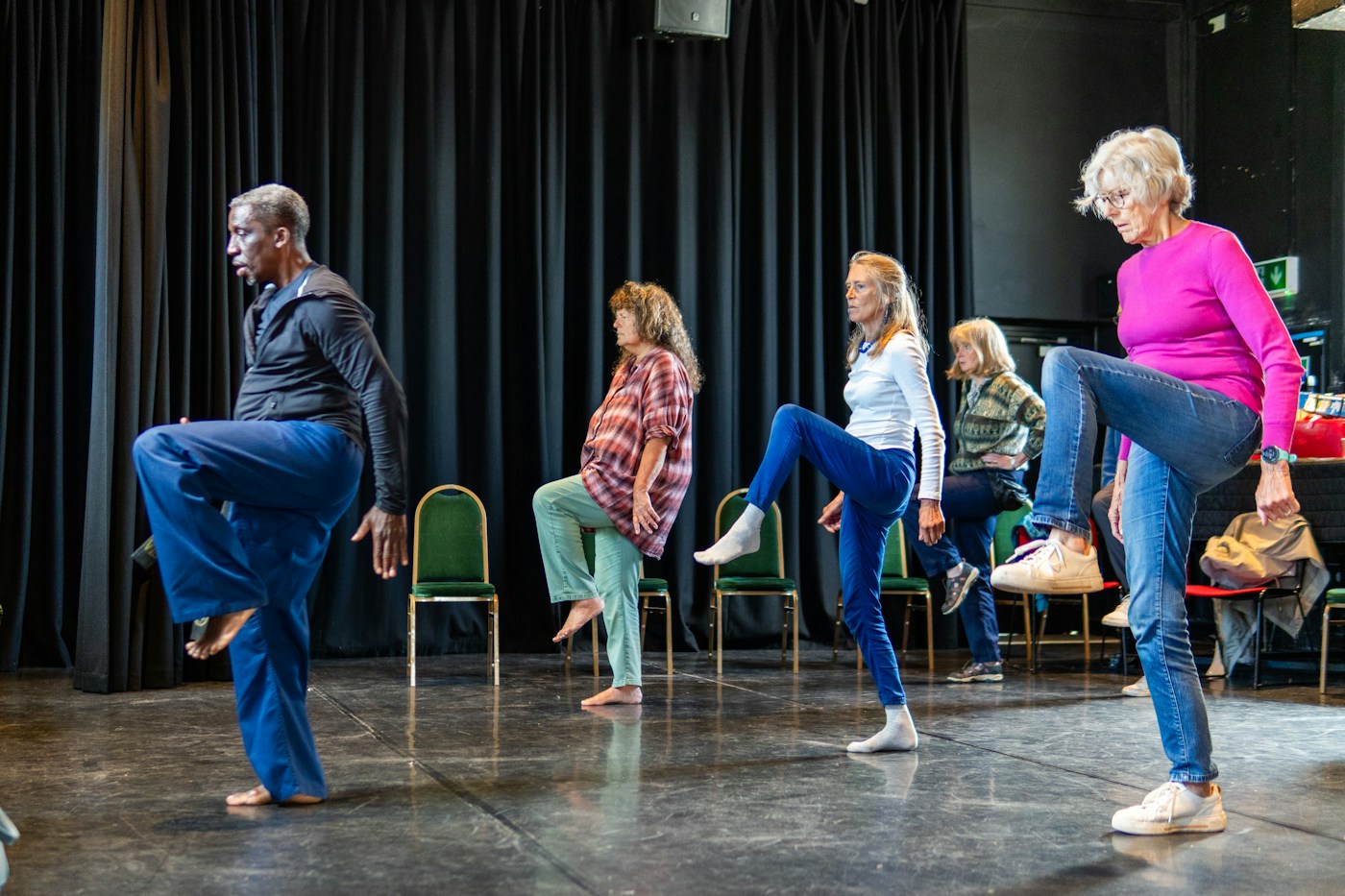
Begin upright, facing your support. Hold a sturdy chair or place your hands against a wall as needed. Slowly move your weight onto one leg, then lift the other foot only as far as feels manageable. Keep your hips level and a slight bend in the standing knee. You are aiming for a quiet, controlled movement, not a high knee lift.
Place the raised foot gently back on the floor before changing sides. The NHS describes a wall-supported version with brief holds, but a suggested hold is not a requirement to keep going when you feel unstable. Start with a smaller lift or shorter pause if that is more comfortable. Return to two feet whenever you need to reset.
Keep the challenge modest
The American Heart Association describes gradually using less hand support as steadiness improves. That is a possible progression, not a deadline. Keeping both hands on a stable support is a valid starting point. Do not remove your hands simply because a video or another person makes the unsupported version look easy.
For this beginner practice, keep your eyes open and your attention on the movement. Avoid adding a cushion, closing your eyes, or combining several challenges at once. If you need a more demanding balance program, a physical therapist or qualified instructor can help select an appropriate progression and check how you are moving.
Notice what helps you feel secure
After practicing, make a short note about the setup: which support you used, whether one side felt more difficult, and whether returning your foot to the floor felt controlled. These observations can help you repeat a comfortable setup. They are not a diagnosis or a measure of your biological age, fitness worth, or future health.
Stop if you feel dizzy, develop pain, or cannot stay secure with support. Persistent or new balance problems deserve medical attention rather than repeated attempts to push through them. If you are recovering from a heart attack or stroke, the American Heart Association advises discussing exercise with your health professional before starting.
Fit balance into a varied week
A short balance practice can sit alongside walking, strength work, and other activities you enjoy. It does not replace them, and a longer hold is not the only sign of useful practice. A calmer weight shift, an easier return to two feet, and confidence using the same safe setup are practical things to notice.
Choose a time when you are alert and can concentrate. Keep your support available every time, even on days when the movement feels familiar. Consistency should mean returning to a manageable task, not making each session harder. If you remain uncertain, bring your notes to a clinician or physical therapist and ask for a demonstration suited to your abilities.
Explore the sources
Prepared with AI assistance for True Healthy Products LLC. Sources inform this educational guide; their inclusion does not imply endorsement of our company or products. See our editorial approach.