THE HEALTHY LIVING JOURNAL
Water Exercise for Beginners: Planning a Comfortable First Pool Visit
A beginner-friendly guide to choosing a pool class, asking useful questions, and making water safety part of your exercise routine.
General educational information · Sources listed below
Start with the kind of water activity you want
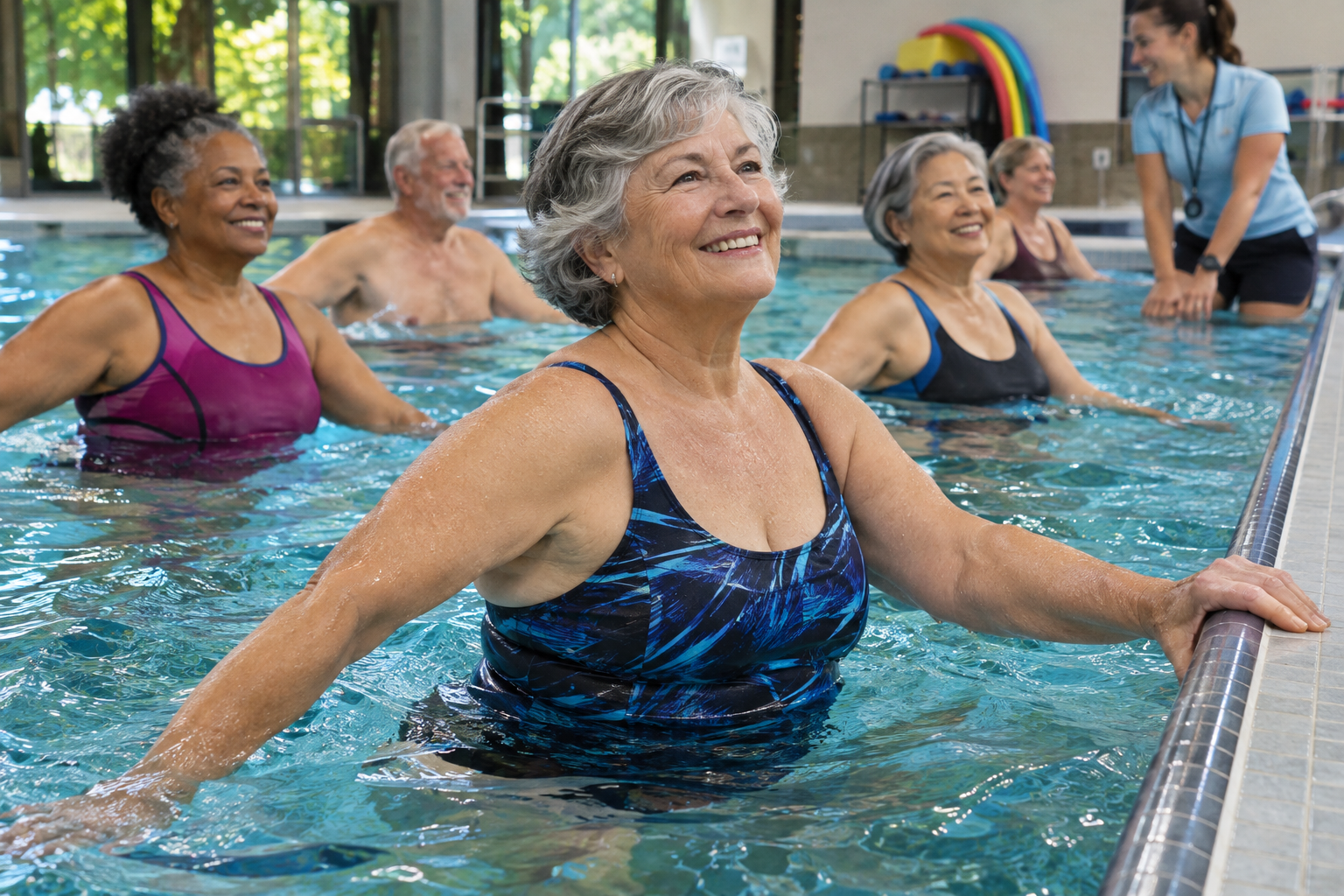
Water exercise can mean much more than swimming laps. A pool schedule might offer shallow-water walking, instructor-led movement classes, or swimming lessons for adults. Those options ask different things of you. Before buying equipment or a membership, decide whether your first goal is to learn water skills, enjoy a change of setting, or find an activity you can repeat comfortably.
CDC describes physical and mental health benefits from water-based activity, including potential benefits for people with arthritis. That does not mean every pool class suits every person or that water makes exercise risk-free. A useful first visit begins with matching the activity, the facility, and the support available to your current abilities.
Ask about the class before signing up
Call the facility and explain that you are new to water exercise. Ask whether the class stays in shallow water, whether you must know how to swim, and how the instructor helps beginners. Find out whether the session includes equipment, how crowded it tends to be, and whether you can observe before joining. A class name alone may not answer these questions.
Also ask about getting into and out of the pool. Steps with a handrail, a ramp, or a lift may matter more to your first experience than the music or class length. Ask staff to explain any access equipment beforehand. If changing rooms, showers, or the walk from the entrance create barriers, include those in your decision rather than treating them as small details.
Put swimming skills and supervision first
Choose a site with lifeguards when possible and swim with a buddy, as CDC recommends. If you are not confident in the water, ask about adult swimming and water-safety lessons. An exercise class is not automatically a substitute for learning these skills. Be clear with staff about your experience rather than assuming that staying near the side will cover every situation.
Pool noodles and other exercise props are not safety devices. CDC recommends a properly fitted, Coast Guard-approved life jacket when one is needed. Ask the facility what is appropriate for your abilities and the activity. Avoid alcohol before or during water activities, and review medicines that affect balance, coordination, or judgment with a health professional before getting in.
Keep the first session simple
Pack what the facility requests and give yourself time to find the changing area, shower, and pool entrance. The first visit can be an orientation rather than a test. Tell the instructor you are new, ask how to signal that you need help, and find out where participants can pause without blocking others.
Follow the instructor’s beginner options instead of trying to match the fastest participant. You can ask for a smaller movement or a rest. There is no need to add equipment or stay for an extra session simply because you made the trip. Afterward, note what felt manageable, what was confusing, and whether the schedule and travel time make another visit realistic.
Make healthy-pool habits part of the plan
Check the facility’s latest health inspection when available. CDC advises showering before entering, keeping pool water out of your mouth, and staying out when you have diarrhea. Clean-looking water can still contain germs. If you have an open wound, especially after surgery, discuss pool use with your clinician and follow the facility’s rules.
People with weakened immune systems should speak with a healthcare provider before swimming. Anyone with a chronic health condition can ask what types and amounts of activity fit their situation. These conversations are especially useful when you are changing activities or returning after a long break.
Judge success by whether the routine fits
Before committing to a package, consider the whole visit: cost, transportation, accessibility, changing time, and how welcoming the instruction felt. A trial class can reveal practical obstacles that a timetable cannot. If the first option does not fit, ask about another beginner session rather than deciding that all water exercise is the same.
Water activity can be one part of a varied movement routine. Keep the focus on finding something enjoyable and repeatable, with appropriate instruction and safety support. You do not need an impressive distance or a collection of pool equipment to make a thoughtful beginning.
Explore the sources
- CDC: Swimming and Your Health ↗
- CDC: Preventing Swimming-related Illnesses ↗
- CDC: Preventing Drowning ↗
- CDC: Adding Physical Activity as an Adult ↗
Prepared with AI assistance for True Healthy Products LLC. Sources inform this educational guide; their inclusion does not imply endorsement of our company or products. See our editorial approach.