THE HEALTHY LIVING JOURNAL
How to Plan a Winter Walk When Sidewalks May Be Icy
Check the pavement, choose footwear with traction, and plan an indoor fallback.
General educational information · Sources listed below
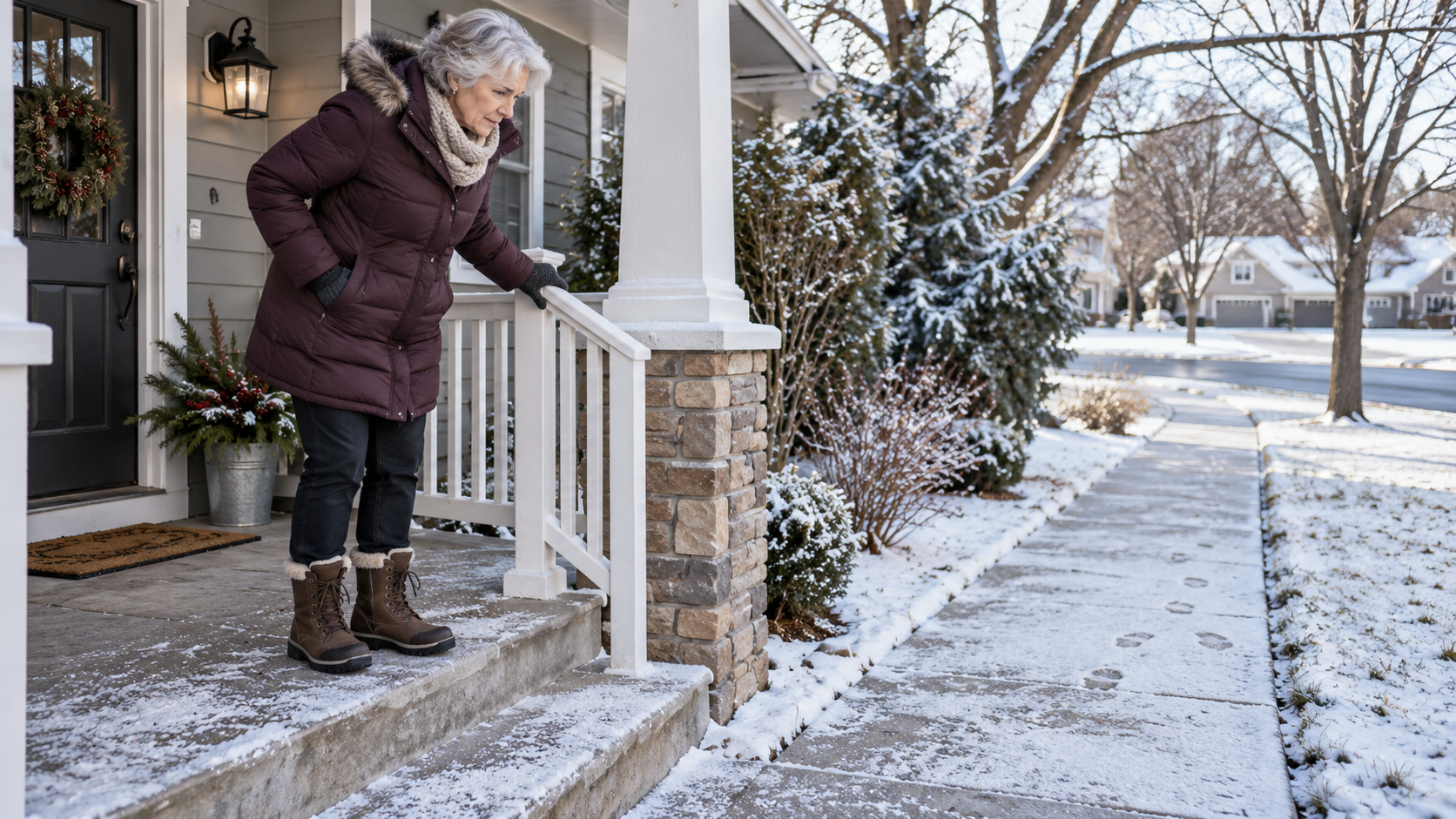
A sidewalk can look walkable from the front window and feel completely different at the bottom of the steps. A damp patch might have frozen overnight, and a thin layer of snow can hide a slick surface. If you walk for exercise, decide where you will go and what would make you turn back before you leave. That gives you room to adjust the walk without feeling that you have to finish the route you planned.
Check the first stretch before committing
Look from your doorway for a clear stretch of pavement and a clear way back. Pay particular attention to steps, slopes and the places where water drains across the sidewalk. If you cannot tell whether a shiny patch is wet or icy, go around it on a cleared surface if one is available. If the only detour would put you in traffic or on another slippery surface, choose a different route.
Think about the return trip as well. Going down a slope may feel different from going up it. If your usual loop ends with a steep descent, start with a short out-and-back on level ground. You can turn around while you are still on familiar pavement. Walk during daylight if it helps you see changes in the surface.
Choose footwear for the surface
The U.S. Department of Veterans Affairs recommends sturdy footwear with good traction for snow and ice. Look at the soles of the shoes you plan to wear. An old pair that still feels comfortable may have worn smooth at the heel or under the ball of the foot. Try your winter socks with the shoes indoors first so you can tell whether the fit feels secure.
Even shoes with good tread can slip on ice. Treat them as one part of the plan. A cleared, treated walkway gives you a better starting point than a stretch of ice you are counting on your boots to handle. If the pavement outside your home is unsafe, wait for it to be cleared or choose an indoor option.
Slow down where traction changes
OSHA recommends shorter steps and a slower pace when walking on snow or ice is unavoidable. For an exercise walk, that might mean slowing down as you approach a driveway or a shaded stretch and giving yourself time to see what is ahead. If you find yourself rushing to keep up with a companion, agree to slow down together.
Keep your attention on where you are going. If you need to check your phone or adjust a glove, stop somewhere clear first. A doorway, curb ramp or parking lot can bring several changes underfoot in a few steps. Look for a cleared crossing rather than stepping across a ridge of snow to stay on your usual route.
Give yourself an indoor fallback
Decide in advance where you can walk if the sidewalks are slick. That might be a hallway, an indoor track or a shopping center that allows walkers. If you stay home, a few short passes through a clear room can replace the trip outside. Choose a space with enough room to turn and move loose items out of your path first.
Keep the fallback simple enough to use. If it takes longer to get ready than the walk itself, you may be tempted to go out even when conditions are poor. Put your indoor walking shoes where you can find them and have a short route in mind. If the outdoor route improves later, you can decide again then. A winter walking habit is easier to keep when the day’s plan can change with the pavement.
Explore the sources
Prepared with AI assistance for True Healthy Products LLC. Sources inform this educational guide; their inclusion does not imply endorsement of our company or products. See our editorial approach.