THE HEALTHY LIVING JOURNAL
Added Sugars vs. Total Sugars: How to Compare Food Labels
Understand total and added sugars, compare equal portions, and use the Nutrition Facts label to make everyday choices that fit your meals.

General educational information · Sources listed below
Read the two lines together
Total sugars and added sugars describe different things on a Nutrition Facts label. Total sugars include naturally occurring sugars and sugars added during preparation or processing. Added sugars are part of that total, not an extra amount to add to it. Reading the two lines together prevents a common mistake. [1]
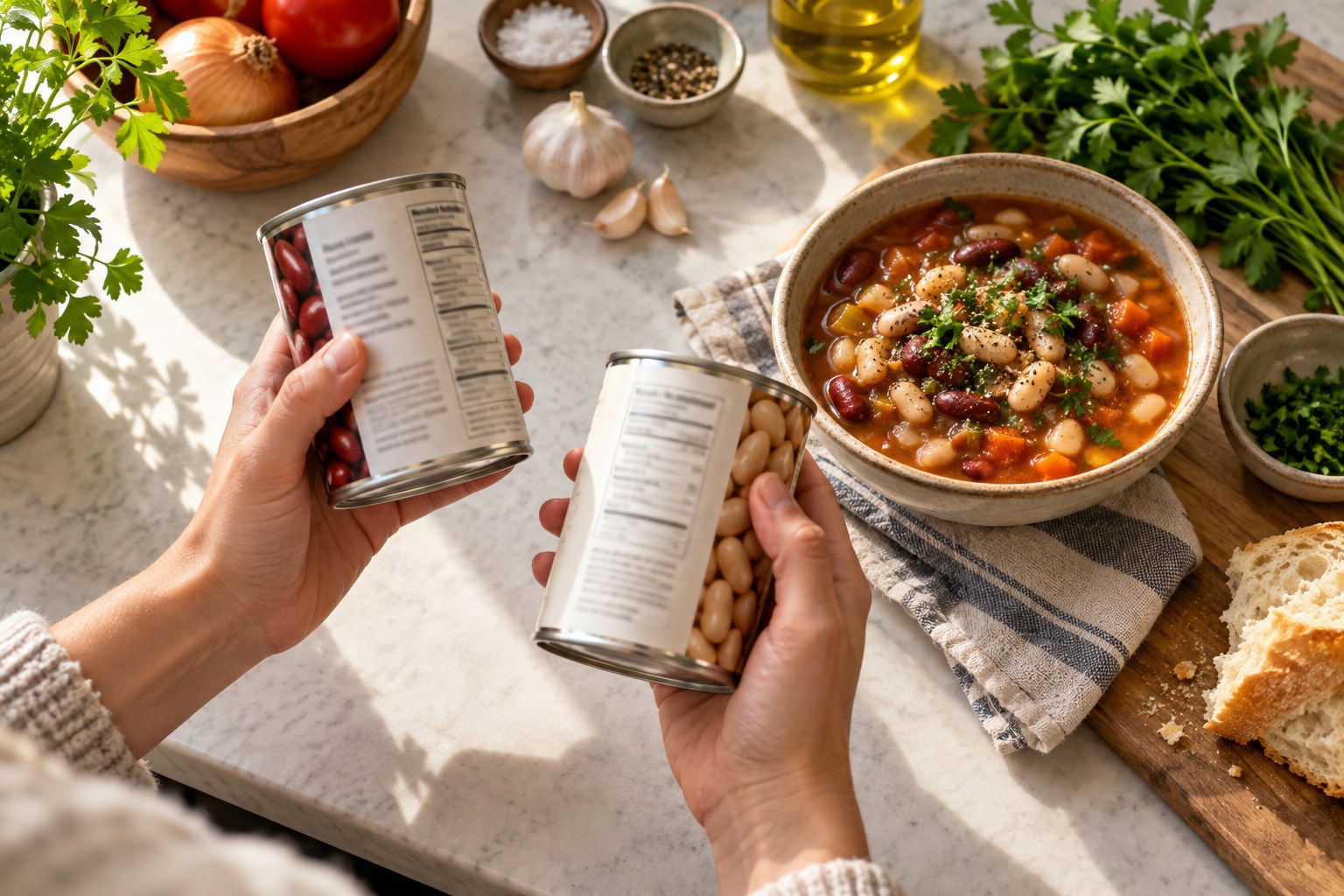
You do not have to calculate the sugar in every bite to make a useful comparison. Begin with a food you buy regularly, such as yogurt, cereal, or a beverage. A quick check can help you understand what distinguishes the options on the shelf.
Understand what added sugars include
Added sugars include sugars added during processing, along with sugars from ingredients such as syrups and honey. Naturally occurring sugars in milk and whole fruit are included in total sugars, but are not automatically counted as added sugars. The label separates those categories to provide more context. [1]
For example, plain dairy yogurt can list total sugars even when no sugar has been added. A flavored version may list both. That difference does not tell you everything about either food, but it makes the comparison more informative than looking at one number alone.
Check the serving size first
The listed amounts refer to the serving size shown. If two packages use different portions, their sugar numbers are not directly comparable until you account for that difference. Also check how many servings the container holds and how much you usually eat or drink. [2]
Consider two similar drinks. One may display information for the full bottle while another lists a smaller serving. Read carefully before deciding that the second contains less sugar. The useful comparison is the amount in a portion you actually intend to consume, not whichever number looks smallest.
Use percent Daily Value as a reference
The added-sugars line also shows percent Daily Value. FDA describes this as a way to understand how a serving contributes to a daily reference amount. It is a general label-reading tool, not a personalized eating prescription. Your needs and medical guidance may differ. [1,2]
Look at the broader label too. Fiber, protein, sodium, and other information can matter depending on the product. A food with less added sugar is not automatically the best choice in every respect, and a single number should not replace attention to variety and overall meals.
Make one practical substitution
Choose a change that preserves something you enjoy. You might mix plain and flavored yogurt, choose an unsweetened beverage some days, or compare two cereals with similar portions. Taste preferences can influence whether a change becomes an ordinary habit or a short experiment.
Buying a less sweet version does not require replacing everything in the kitchen. Start with one frequently used item and see how it works in your routine. Keep convenience and price in the decision as well, particularly if the alternative would create extra work you cannot maintain.
Watch package wording without overreacting
Front-of-package descriptions do not replace the Nutrition Facts panel. A product can contain naturally occurring sugars, added sugars, or both, whatever the design of its wrapper suggests. Read the actual label and ingredient information when you want to understand a specific food. [1]
There is also no need to treat every sweet food as a mistake. The purpose of the comparison is informed choice. You may decide to buy your usual product, use a different portion, or choose an alternative. A workable eating pattern allows decisions rather than demanding identical choices at every meal.
Turn the comparison into a repeatable habit
On your next shopping trip, compare just two versions of one food. Check serving size, total sugars, added sugars, and the other information relevant to you. Once you know the products, future decisions often take less time.
If you have diabetes or another condition requiring individualized nutrition guidance, use the plan from your care team. Added sugars alone do not describe all carbohydrates or determine how a food fits that plan. For everyday shopping, understanding the two sugar lines is a useful step toward reading labels with more confidence.
Explore the sources
Prepared with AI assistance for True Healthy Products LLC. Sources inform this educational guide; their inclusion does not imply endorsement of our company or products. See our editorial approach.