THE HEALTHY LIVING JOURNAL
Choosing Lower-Mercury Seafood for Simple Everyday Meals
Use the fish name, a reliable mercury chart, and a realistic cooking plan to make seafood shopping less confusing.
General educational information · Sources listed below
Start with a meal you already enjoy
Seafood shopping can feel complicated when a counter offers several names, prices, and package claims. Start with a simpler question: what meal would you actually like to make? A fish taco, a warm grain bowl, or a sandwich gives your shopping trip a purpose. You can then choose a suitable fish rather than buying an unfamiliar fillet and hoping a recipe appears.
Fish supplies protein and other nutrients, but no single food has to carry an entire eating pattern. Seafood can sit alongside vegetables, grains, beans, and other foods you enjoy. If you do not eat fish because of an allergy, preference, or other reason, a registered dietitian can help you explore alternatives without turning every dinner into a nutrition calculation.
Look up the exact fish name
The FDA and EPA fish advice groups species by mercury level. Its Best Choices include salmon, sardines, pollock, shrimp, and canned light tuna. The chart was developed particularly for pregnancy, breastfeeding, and children; its categories also offer adults a practical starting point for choosing lower-mercury varieties.
Specific names matter. Canned light tuna and albacore tuna appear in different categories, as do Atlantic mackerel and king mackerel. A broad word such as tuna or mackerel may leave an important question unanswered. Read the package or ask the seller, then check the current chart linked below. If you might become pregnant, are pregnant, or are breastfeeding, follow the chart’s specific frequency guidance and discuss individual questions with your clinician.
Locally caught fish require another check: consult the relevant state or local fish advisory. A familiar fishing spot does not establish that its catch has the same contaminant profile as a store product. Mercury information and safe handling answer different questions; both deserve attention.
Match the form to your routine
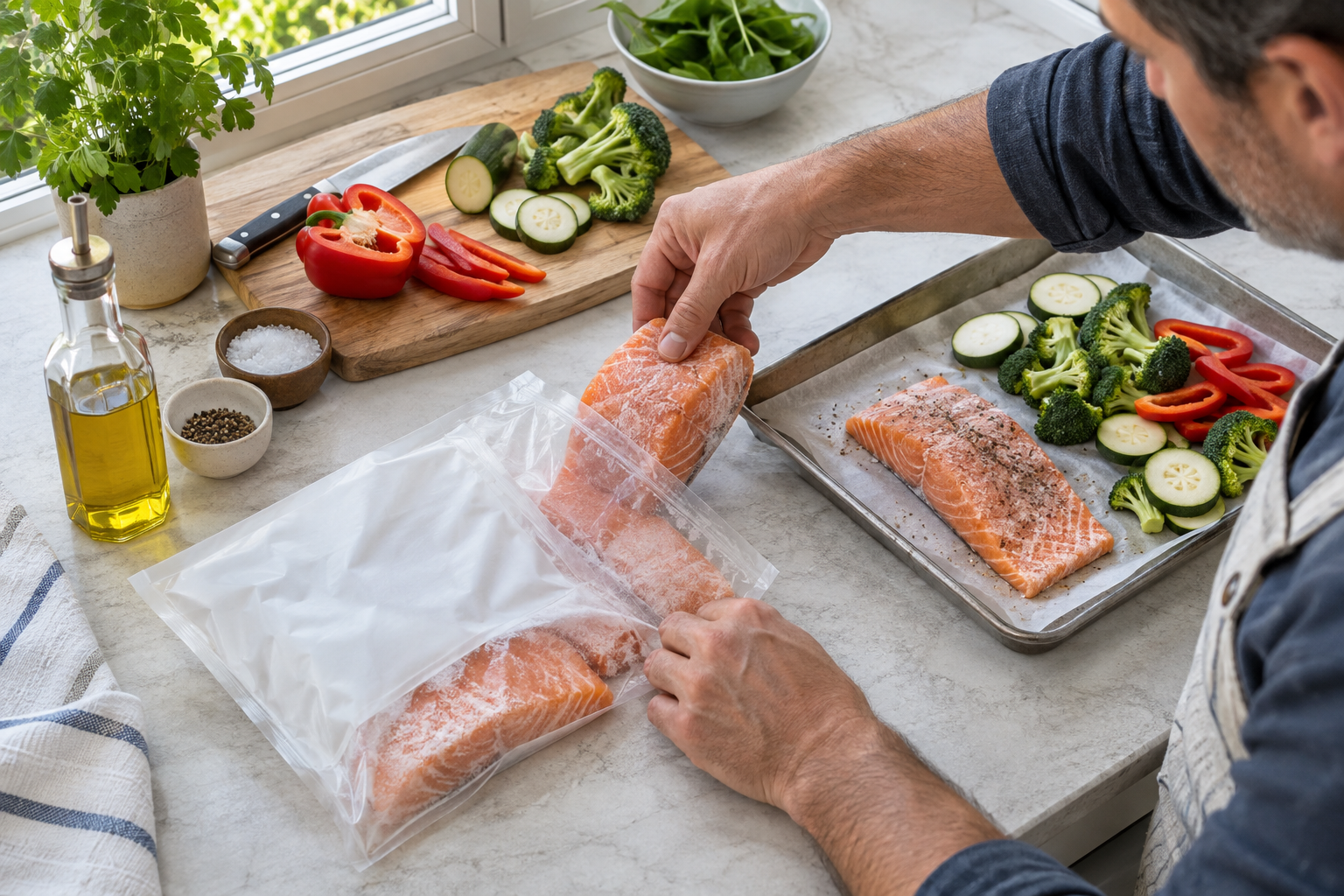
Choose a format that fits the time and equipment you have. A frozen portion can suit an occasional fish dinner, while a shelf-stable can may be easier for a quick lunch. Fresh seafood makes the most sense when your plans include cooking it soon. Buying the option you can use is more useful than buying the option that sounds most impressive.
For a first attempt, keep the other ingredients familiar. Pair cooked fish with your usual rice and vegetables, or put it into a tortilla with shredded cabbage. Try canned fish in a sandwich filling or on a salad. These are meal ideas, not a requirement to follow a special seafood diet. Taste, budget, and convenience all influence whether an idea becomes a habit.
Plan the cold storage before buying
FDA advises refrigerating seafood at 40°F or below and using it within two days of purchase, or freezing it. Put it away promptly. Plan refrigerator space before the shopping trip, and keep raw seafood separate from foods that will be eaten without cooking.
Follow package directions for thawing, especially for vacuum-packed products. Refrigerator thawing allows more planning time than a last-minute decision at the counter. Wash hands and food-contact equipment after handling raw seafood. A clean plate should receive the cooked food; the plate that held it raw needs washing first.
Most seafood should reach an internal temperature of 145°F, according to FDA. A food thermometer helps take uncertainty out of cooking. Freezing does not kill every harmful germ, so previously frozen fish is not automatically safe to eat raw. Older adults, pregnant people, and people with weakened immune systems should avoid raw or undercooked seafood.
Make the next dinner easier
After the meal, note the fish name, where you bought it, and whether the preparation was worth repeating. A short note on your phone can be more useful than a folder full of ambitious recipes. If the fish tasted good but the meal felt complicated, simplify the sides next time.
Build a small set of dependable combinations rather than trying a new species at every meal. You might rotate a familiar canned option and a frozen fillet, changing the vegetables or seasoning. Variety can come from the whole plate. The practical goal is an enjoyable meal supported by a clear species choice, appropriate storage, and safe preparation.
Explore the sources
Prepared with AI assistance for True Healthy Products LLC. Sources inform this educational guide; their inclusion does not imply endorsement of our company or products. See our editorial approach.