THE HEALTHY LIVING JOURNAL
Canned Beans Made Simple: Labels, Rinsing, and Everyday Meals
Use canned beans in quick meals, compare sodium on labels, and plan portions and storage so a convenient pantry ingredient gets used.
General educational information · Sources listed below
Start with a meal you already make
Canned beans can turn a simple pantry ingredient into part of lunch or dinner without the longer cooking time that dried beans require. They can work in soups, salads, grain bowls, and wraps. The easiest starting point is usually a familiar meal rather than a completely new recipe. [1]
If you make vegetable soup, add a suitable amount of beans. If you enjoy rice bowls, try beans beside the vegetables. You do not need an ambitious batch-cooking plan to find out which type your household likes and how often you will use it.
Compare the can before buying
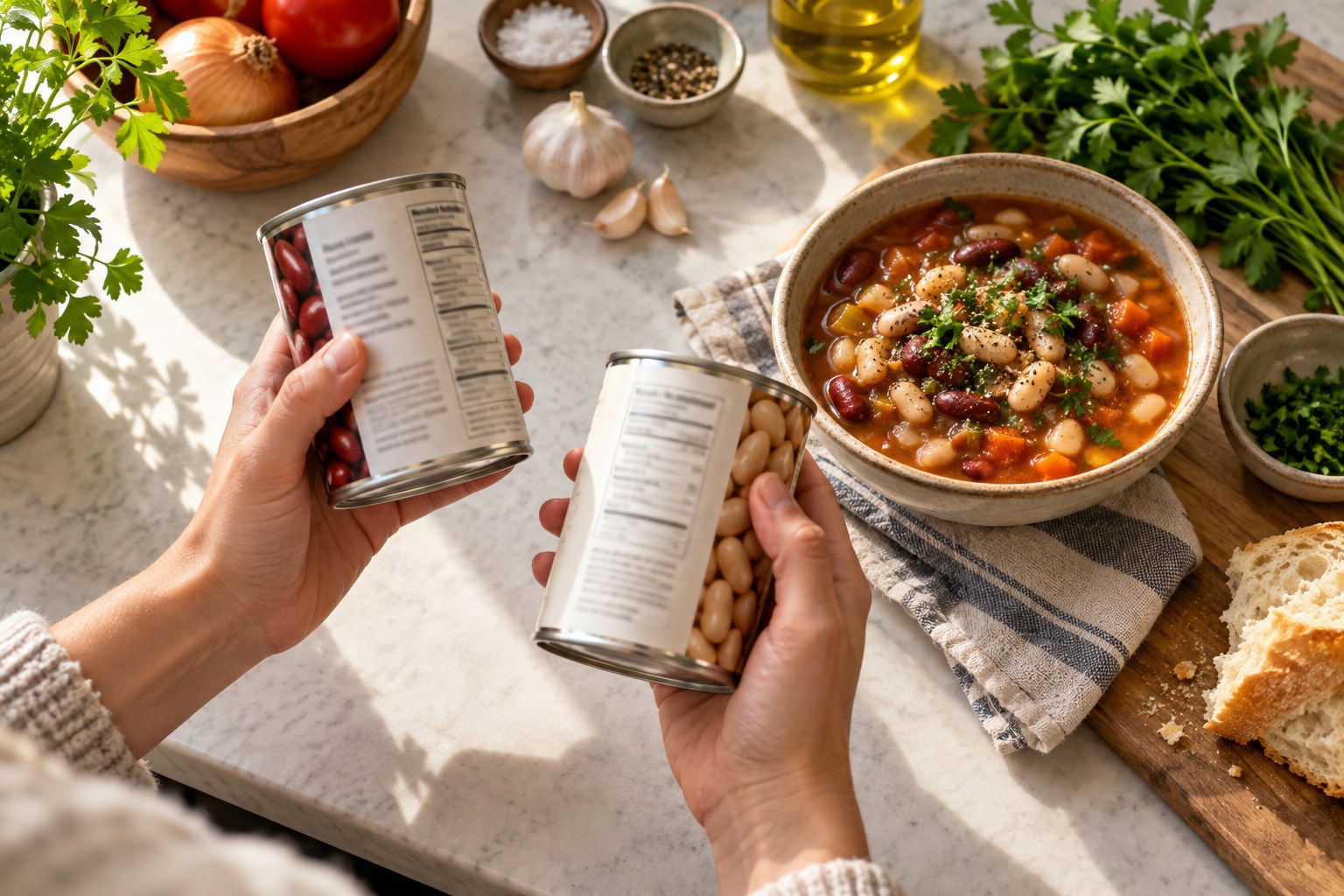
Plain canned beans and beans prepared in a sauce can have different ingredients and nutrition profiles. Read the ingredient list and Nutrition Facts panel instead of assuming that all products with the same bean name are equivalent. Compare the same serving size when looking at sodium. [1,2]
Lower-sodium or no-salt-added options may be available. Choose the version that fits your needs and budget, and consider what else will go into the meal. A salty broth, seasoning mix, or sauce can change the final dish even if the beans themselves contain relatively little sodium.
Drain and rinse when appropriate
Draining and rinsing plain canned beans can reduce some of their sodium and remove packing liquid. Use a clean strainer and running water. This is a practical preparation option, not a way to make every canned product meet an individual sodium restriction. [1,2]
Some recipes deliberately use the liquid, and a prepared bean dish may be intended to keep its sauce. Decide based on the product and recipe rather than applying one rule automatically. If your clinician has given you a sodium target, use that guidance when choosing ingredients for the whole meal.
Add variety without a complicated recipe
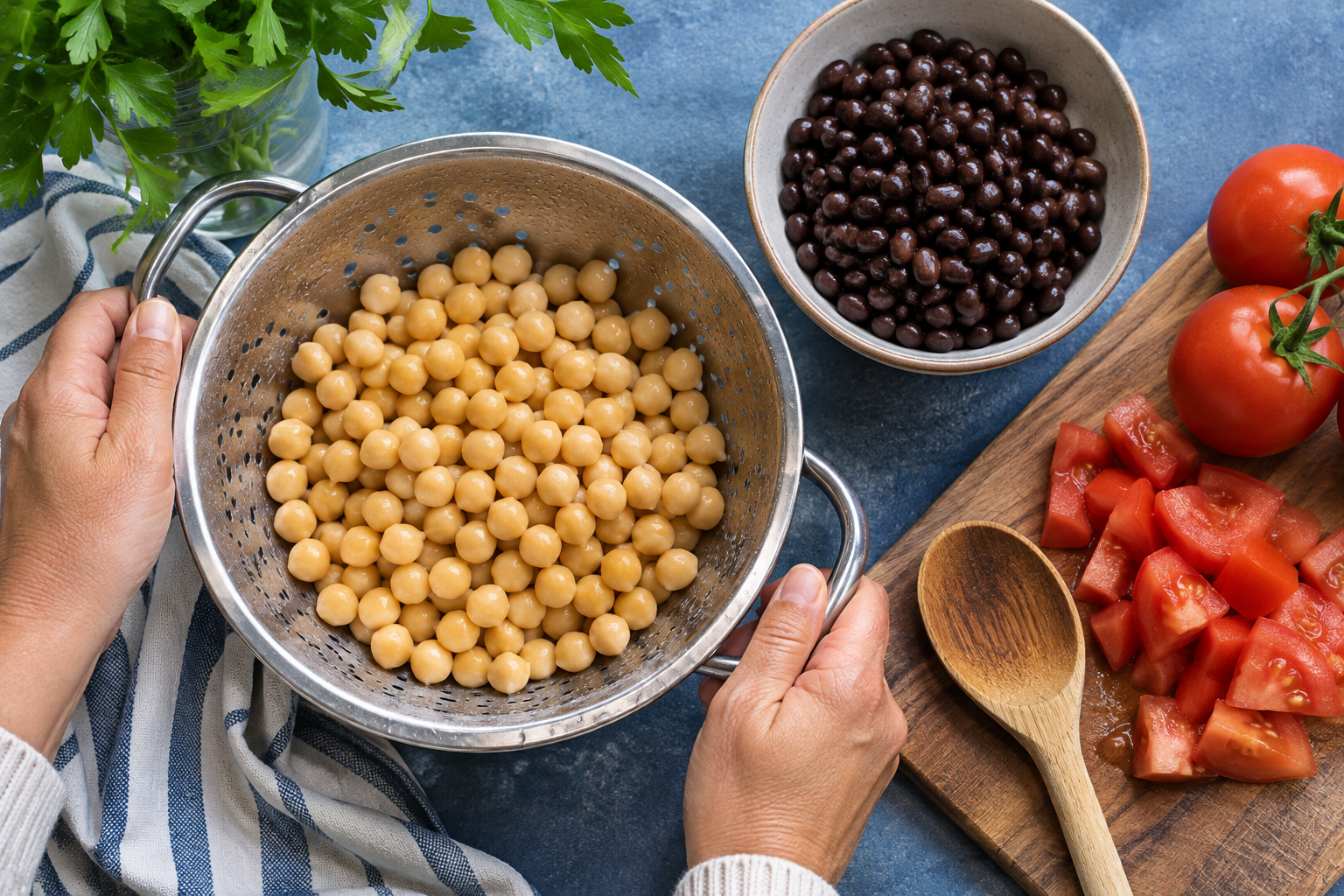
Chickpeas can join chopped vegetables and a simple dressing. Black beans can become part of a rice bowl or tortilla filling. White beans can add substance to soup or be mashed into a spread. These combinations are suggestions to adapt, not fixed prescriptions. [1]
Choose seasonings that suit your preferences. Lemon, herbs, or spices may provide flavor without relying entirely on salty additions. If you dislike a texture in one dish, try another preparation before buying several more cans of the same product.
Introduce beans at a comfortable pace
Beans contribute fiber, and suddenly adding much more fiber than usual can cause gas or digestive discomfort. Start with a modest addition and observe how you feel. A gradual change may be easier to maintain than putting a large portion into every meal at once. [3]
People following a prescribed low-fiber diet or another medical eating plan should not replace it with general advice. If beans repeatedly cause substantial symptoms, discuss the pattern with a clinician or dietitian. Preparation tips cannot determine whether a particular food fits your health needs.
Plan for the amount left over
Think about the opened can before putting away the groceries. If you expect to use only part, choose a second meal that can include the remainder. Keep opened beans covered and refrigerated according to safe-storage guidance and the product instructions. Do not leave the leftovers on the counter between meals. [1]
Label the container with the opening date if that helps you keep track. Freezing a suitable portion may be useful when you cannot use it soon. Choose a container and storage method appropriate for the food rather than treating the unopened can's shelf life as a guide after opening.
Make the pantry work for you
Keep one or two types you know you enjoy, and check what is already in the cupboard before buying more. A convenient ingredient is useful only if it becomes a meal. A short note on your shopping list, such as “white beans for soup,” can make the connection explicit.
Try one can in one familiar dish this week. Notice the preparation time, flavor, portion, and leftovers. Those details help you decide whether to repeat the idea, adjust it, or try a different bean. The goal is an ordinary meal you can make again without much extra effort.
Explore the sources
- Iowa State University Extension: Beans ↗
- Mississippi State University Extension: Bean Basics ↗
- NIDDK: Dietary Fiber and Digestion ↗
Prepared with AI assistance for True Healthy Products LLC. Sources inform this educational guide; their inclusion does not imply endorsement of our company or products. See our editorial approach.