THE HEALTHY LIVING JOURNAL
How to Thaw Frozen Chicken Safely
Choose a safe way to thaw frozen chicken based on how soon you can start cooking.
General educational information · Sources listed below
Dinner is an hour away and the chicken is still frozen. The tempting move is to leave it on the counter while you get everything else ready. A better plan is to choose a thawing method based on how soon you can cook. The refrigerator works when you have time. Cold water and the microwave can help when dinner is closer, provided you cook the food promptly afterward.
Why the counter is a poor shortcut
A frozen package doesn't warm evenly. The center may still feel hard while the outside has already warmed enough for bacteria to multiply. Checking the center with your fingers tells you very little about how warm the surface has become. The CDC recommends thawing in the refrigerator, in cold water, or in the microwave instead of on the counter.
Think about where liquid from the package could go, too. Raw poultry juices can reach a cutting board, a refrigerator shelf, or a salad bowl even before cooking starts. Keep the raw package apart from foods you will eat without cooking. Wash your hands after handling it, and clean surfaces that come into contact with raw juices.
When you have time, use the refrigerator
Put the package on a rimmed plate or in a container on a low shelf of a refrigerator set to 40°F or below. The dish catches leaks, and the low shelf keeps them from dripping onto other groceries. Leave room to move the package without brushing it against ready-to-eat foods.
Plan for the shape of what you froze. A flat package of separate portions is easier to work into a weeknight plan than a thick block. If you often forget to move a package from the freezer, connect the task to something you already do. Take it out when you put away dinner dishes the night before, or put a reminder on your grocery list when you plan the week's meals.
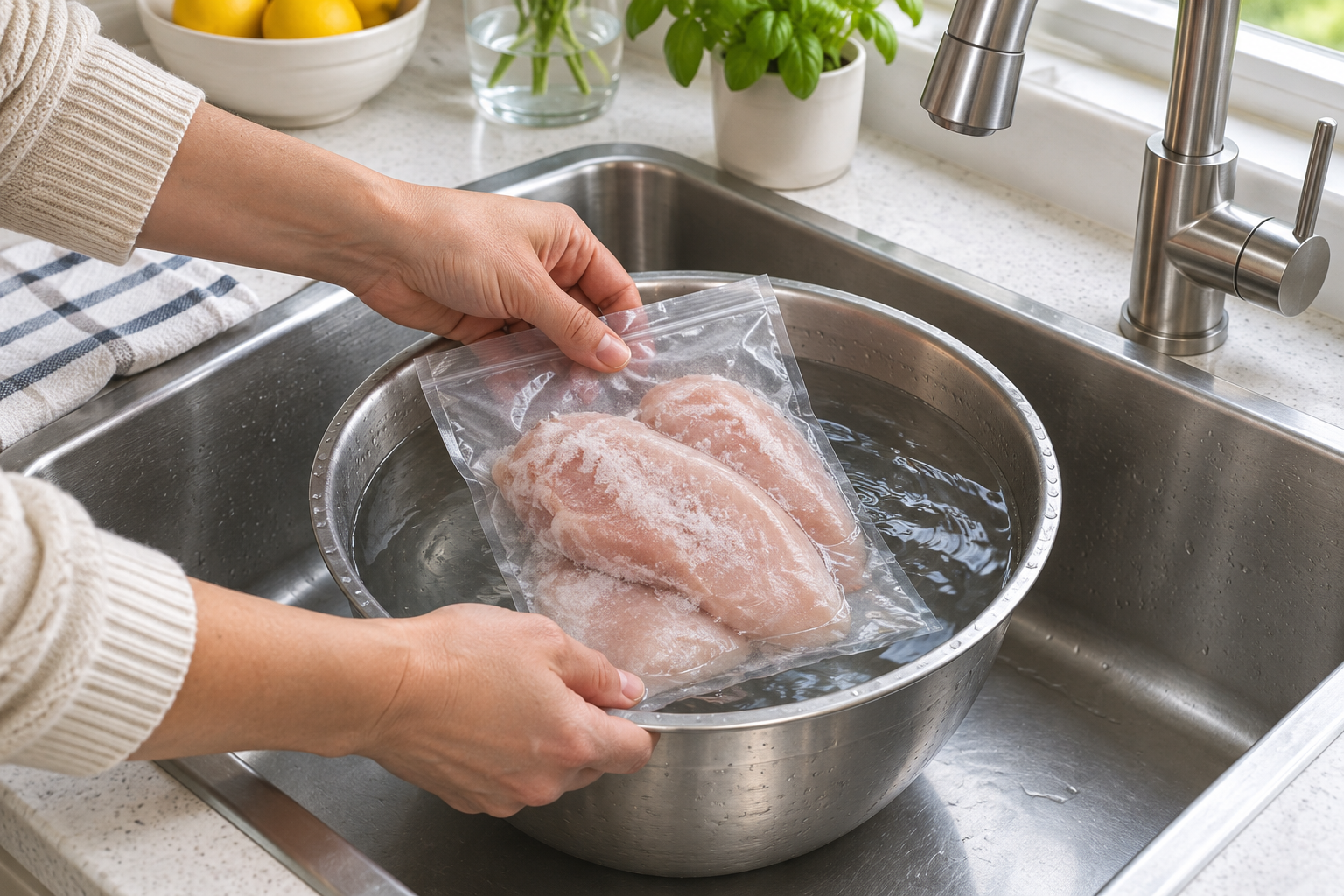
When dinner is closer, use cold water
Check the packaging for holes or torn seams. If needed, put the food in a clean, leakproof bag before placing it in cold water. Keep the bag closed and the food submerged. This gives the water contact with the outside of the package without letting raw juices spill into the bowl. Keep the bowl away from anything you plan to serve raw.
Cold-water thawing suits a meal you are ready to cook as soon as the food is thawed. Set up the pan, read the recipe and get your food thermometer ready before you begin. If a phone call or errand might take you away from the kitchen, leave the food in the refrigerator and change the meal plan.
Use the microwave when cooking can start right away
Check your microwave's instructions for defrosting and use a microwave-safe dish. Remove packaging that isn't meant for microwave use. Follow the appliance's prompts to turn the food or separate portions when possible. Keep the dish in a place where drips will be easy to clean.
A microwave can leave parts of a piece of meat warm or partly cooked while other parts are still thawing. Move the food straight into cooking when the defrost cycle finishes. For chicken, use a food thermometer to confirm it has reached 165°F. Color alone is a poor guide to whether the inside reached that temperature.
Make room for a backup dinner
Keep one meal on hand that doesn't depend on thawing raw meat. A can of beans, frozen vegetables and a grain you can cook quickly will give you an option when the original plan falls through. Choose the backup early if the package is still solid and you won't have time to handle it safely. That way dinner can go ahead and tomorrow's protein can thaw in the refrigerator while you eat.
Explore the sources
Prepared with AI assistance for True Healthy Products LLC. Sources inform this educational guide; their inclusion does not imply endorsement of our company or products. See our editorial approach.