THE HEALTHY LIVING JOURNAL
Protecting Your Skin While Gardening: Gloves, Clothing and Planning
A practical way to prepare for pruning, planting and yard cleanup with protective clothing, sensible supplies and a plan for noticing skin changes.

General educational information · Sources listed below
Prepare before the first handful of soil
A short garden job can grow into an afternoon of pulling weeds, moving pots and gathering branches. Skin protection is easier when it is part of getting ready, instead of something you remember after a scratch. The American Academy of Dermatology recommends covering your skin while working with plants because sap, thorns and spines can cause problems.
Start by naming the job you actually plan to do. Repotting a houseplant, pruning a thorny shrub and cleaning up a yard involve different materials and tools. Put your clothing and supplies beside the tools before you begin. This small preparation step makes it easier to avoid interrupting the task repeatedly or reaching into a pile of plants with bare hands.
Give hands and forearms attention
Gloves and long sleeves are central to both dermatologists' gardening advice and CDC guidance on preventing a plant-associated fungal infection called sporotrichosis. CDC explains that the fungus can enter through cuts or scrapes, including a rose-thorn prick. Protective clothing is a practical precaution when handling plant material.
Check your gloves before each session. Look for holes, damaged seams or a cuff that leaves an awkward gap at your wrist. Try holding the tools you expect to use while wearing them. If the pair makes a tool difficult to control, choose equipment suitable for that task. Keep a spare pair available so a missing glove does not become a reason to start unprotected.
Think beyond your hands
AAD recommends long sleeves, pants, socks and shoes that cover the feet when working with plants. It also advises a wide-brimmed hat and sunglasses outdoors. Think about your whole working position, including what touches your arms and legs when you reach across a bed or carry a bundle of branches.
Lay out your clothing before a planned weekend cleanup. Keep frequently used gardening clothes in a convenient place, and check that you can bend and reach comfortably. For shared garden sessions, tell helpers what materials will be handled so they can arrive prepared. Having a clear place for tools and collected branches also makes the work easier to organize.
Include sun protection in the plan
Exposed skin needs attention even when most of your body is covered. AAD recommends broad-spectrum, water-resistant sunscreen with SPF 30 or higher, including on exposed areas such as the face, neck and ears. Its gardening guidance also recommends reapplying every two hours. Follow the product label, including directions related to water and sweating.
Make sunscreen part of the supplies you gather at the start. Before settling into a long task, decide where you can take a break and how you will remember to check the time. A hat, clothing and shade can work together with sunscreen. Changing the order of your jobs may let you do some work in a shaded area rather than staying in an exposed bed for the entire session.
Know why a small skin change deserves context
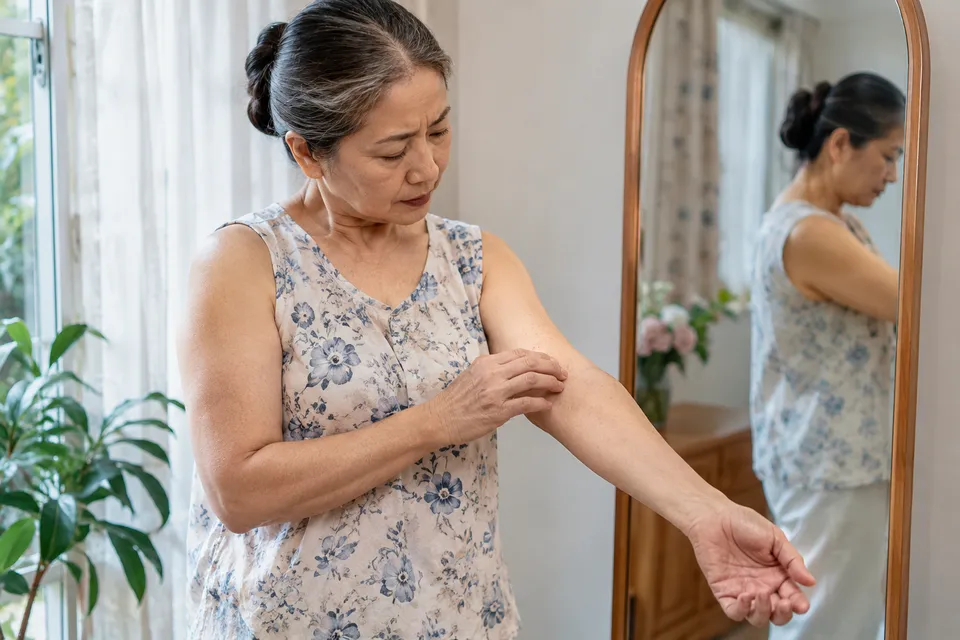
CDC says skin symptoms of sporotrichosis can begin one to twelve weeks after exposure. A small bump may be the first sign, with additional bumps or sores developing later. This is one reason to mention gardening and plant contact when discussing an unexplained skin problem with a health professional. A photograph or description alone cannot establish the cause.
If you notice a persistent or worsening bump, sore or rash, contact a clinician for advice. Write down when you first noticed it and whether you recall a thorn prick or other injury. Record the activity and approximate date while the details are still fresh. There is no need to decide that a particular infection is responsible before asking for an assessment.
Make the next gardening session easier
At the end of the job, give your protective equipment a designated home. Follow the manufacturer's cleaning and drying instructions for gloves and other reusable supplies. Replace worn equipment before the next planned session. A small container for frequently needed items can prevent a search through the shed every time you want to spend twenty minutes outside.
Review what interrupted the work. Perhaps your sleeves kept riding up, your spare gloves were missing, or sunscreen was stored indoors far from the tools. Fix one practical obstacle before the next session. A repeatable preparation routine can help you keep skin protection part of planting, pruning and cleanup throughout the year.
Explore the sources
- American Academy of Dermatology: How to prevent skin problems while gardening ↗
- CDC: Sporotrichosis Basics ↗
Prepared with AI assistance for True Healthy Products LLC. Sources inform this educational guide; their inclusion does not imply endorsement of our company or products. See our editorial approach.