THE HEALTHY LIVING JOURNAL
When to Reapply Sunscreen While Swimming
Use the 40- or 80-minute water-resistance label, your towel breaks, and the two-hour outdoor interval to plan when to reapply.
General educational information · Sources listed below
Read the two clocks on the bottle
At an outdoor pool, it is easy to put sunscreen on once and assume it will last until lunch. Swimming and toweling off can shorten that window. Before you head out, turn the bottle around and read the Drug Facts directions. Look for the amount of time the product is labeled to resist water and the instructions for applying it again.
A U.S. sunscreen labeled water resistant should specify 40 or 80 minutes. That number describes how long it remains effective during swimming or sweating under the required test conditions. The SPF number describes a different property and cannot tell you how long the product lasts in the pool. Choose broad-spectrum SPF 30 or higher with a water-resistance claim if you expect to swim outdoors.
The other clock is the ordinary outdoor reapplication interval. Reapply at least every two hours while outdoors, even if you are sitting in a chair between swims. When you swim or sweat, follow the shorter interval on your bottle. Reapply immediately after towel drying, even if you have been in the water only briefly.
Apply before you get to the pool
Put sunscreen on about 15 minutes before going outside, following the label. For most adults, about one ounce is the amount needed to cover exposed body skin when wearing a swimsuit. The ears, back of the neck, shoulders, tops of the feet and skin along swimsuit edges are easy to miss. If you cannot reach your back, ask someone to help or cover it with a swim shirt.
Set the bottle where you will see it when you reach for your towel. A phone timer can help during a longer swim, especially if you tend to lose track of time in the water. Keep the product in the shade or wrapped in a towel to shield it from direct sun, and check the expiration date before leaving home. If you borrowed the bottle or transferred some sunscreen to a travel container, bring the original label or take a photo of the directions so you can check them at the pool.
Plan for the way you actually swim
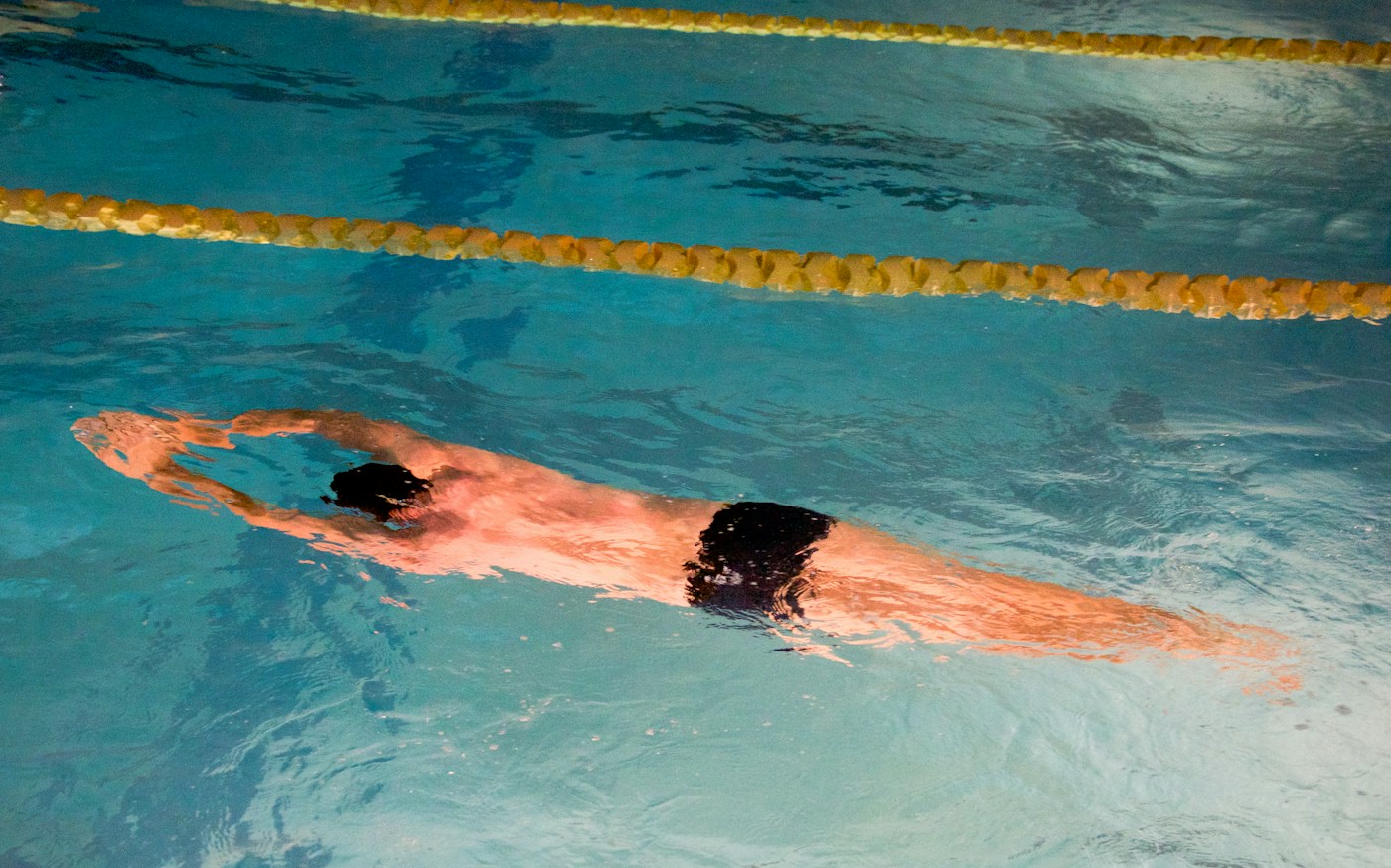
If you plan to spend 50 minutes in the pool and the bottle says 40 minutes, schedule a break by the 40-minute mark to reapply. If your bottle says 80 minutes and you get out after 20 minutes and dry with a towel, put it on again then. The number on the label is the limit during swimming or sweating, and the towel can bring your next application forward.
Short swims can make the timing harder to follow. You may jump in for a few minutes, sit by the pool, and go back in before you notice how much time has passed. Use each towel break as a reminder. If you are unsure when you last applied sunscreen, take a break in the shade, check the directions and reapply before heading back into the sun.
Give yourself shade and coverage between swims
A swim shirt can cover shoulders and the upper back during laps. Out of the water, use a hat, sunglasses and a shaded place to sit. These steps reduce the amount of skin you have to protect with sunscreen alone. Use sunscreen on skin your clothing leaves exposed, and keep the bottle within reach when you change into dry clothes or move to another part of the pool deck.
Before leaving home, check that you have enough sunscreen for the first application and for breaks. If you are sharing one bottle, it can run low sooner than you expect. Read the timing on the actual bottle you packed, since two products with the same SPF can have different water-resistance intervals. A pool bag with sunscreen, a towel and a cover-up makes it easier to follow through when you would rather get back in the water.
Explore the sources
Prepared with AI assistance for True Healthy Products LLC. Sources inform this educational guide; their inclusion does not imply endorsement of our company or products. See our editorial approach.