THE HEALTHY LIVING JOURNAL
Where to Check a Turkey’s Temperature Before Serving
Learn where to place the thermometer, when to return the bird to the oven, and how to check stuffing.
General educational information · Sources listed below
The skin is golden and the kitchen smells like dinner, but the outside of a turkey tells you little about the temperature inside. Even a pop-up timer leaves parts of the bird unchecked. A food thermometer lets you decide when to take the turkey out based on what is happening inside the meat.
For a whole turkey, plan to check three areas before serving. Set out your thermometer and oven mitts before cooking, and give yourself enough time to return the bird to the oven if one of the readings is low.
Use the roasting chart to plan your day
FoodSafety.gov provides estimated roasting times by weight and separates stuffed birds from unstuffed ones. Use those estimates to work backward from when you want to eat. Leave time for temperature checks, any additional cooking, and the rest before carving. For oven roasting a thawed whole turkey, CDC guidance calls for an oven set to at least 325°F.
Keep the chart near the recipe, but let your thermometer make the final decision. Two birds of similar weight can finish at different times. Stuffing changes the timing as well. If guests arrive before the bird is ready, you can serve another course first and leave the turkey in the oven.
Check the breast, thigh, and wing
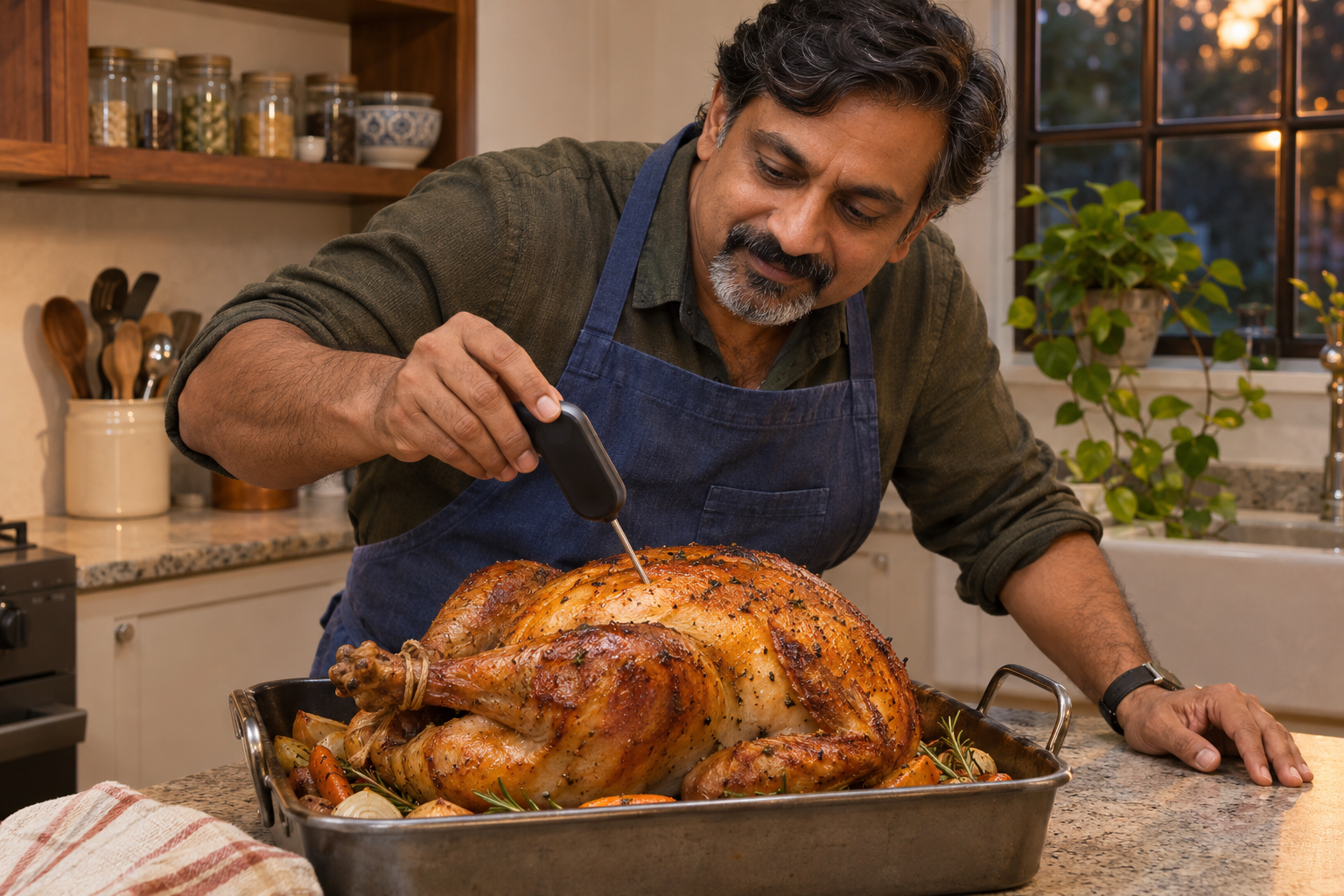
Set the roasting pan on a stable, heatproof surface where you can reach the bird safely. Check the thickest part of the breast. Then insert the probe near the joint where the thigh meets the body, aiming into the inner thigh. For the third reading, check near the point where the wing meets the body, aiming into the inner wing.
Keep the tip clear of bone. If you feel it touch something hard, reposition it in the meat and check again. Follow the thermometer instructions for how deeply to insert the probe and how long to wait for a reading. Each of the three areas needs to reach at least 165°F. A breast reading above that temperature does not compensate for a thigh or wing reading below it.
Put the turkey back if a reading is low
If one spot falls short, return the bird to the oven. Before the next check, note which area was coolest so you can find it again. Recheck all three areas before carving, especially if a previous reading seemed unusually high or low. Wash the probe as directed by the manufacturer after contact with meat that has yet to reach the safe temperature.
A pop-up timer can remind you to get the thermometer ready. You still need to check the breast, thigh, and wing. The same goes for clear juices, a browned skin, and the time printed on the package. Those clues can tell you when to start checking. They cannot confirm the internal temperature in each part.
Give stuffing its own temperature check
CDC recommends baking stuffing separately in a casserole dish for safety. A separate dish also lets you check the center easily. If the stuffing is inside the turkey, check its center independently of the meat. With either method, the middle of the stuffing needs to reach 165°F.
If you cooked the stuffing inside the bird, CDC advises waiting 20 minutes after removing the turkey from the oven before taking the stuffing out. Build that wait into your serving plan. Set the carving board and serving utensils out while the bird rests so you can move the cooked food without rushing.
For a simple reminder, write down four places on your cooking notes: breast, thigh, wing, and the center of any stuffing. Keep the thermometer beside the notes. If a reading is below 165°F, allow more cooking time and check again before serving.
If someone else is helping with dinner, agree on who will take and record the readings. That gives the person carving a clear signal that the temperature checks are complete, even when several dishes are coming out of the oven at once.
Explore the sources
Prepared with AI assistance for True Healthy Products LLC. Sources inform this educational guide; their inclusion does not imply endorsement of our company or products. See our editorial approach.