THE HEALTHY LIVING JOURNAL
How to Cook Safely in a Slow Cooker
A practical guide to thawing meat, choosing the right setting, and checking when a slow-cooked meal is ready to serve.
General educational information · Sources listed below
Before you start
A slow cooker can make dinner easier on a busy day, but it still needs a recipe that suits the appliance and enough time on a cooking setting. A frozen block of chicken, an insert filled to the rim, or a dial left on Warm can change how the meal heats. Think through those details before you start chopping.
Begin with a clean insert, lid, utensils, and work surface. Keep meat and poultry refrigerated until you’re ready to assemble the meal. If you prep vegetables ahead, refrigerate them separately from raw meat. That makes it easier to handle each ingredient without spreading raw juices to foods that won’t be cooked.
Set a food thermometer on the counter so it’s ready when dinner is nearly done. The recipe’s cooking time helps you plan your day, and the thermometer gives you a way to check the actual food. It’s especially useful when the pieces are larger than the recipe calls for.
Thaw meat before it goes in
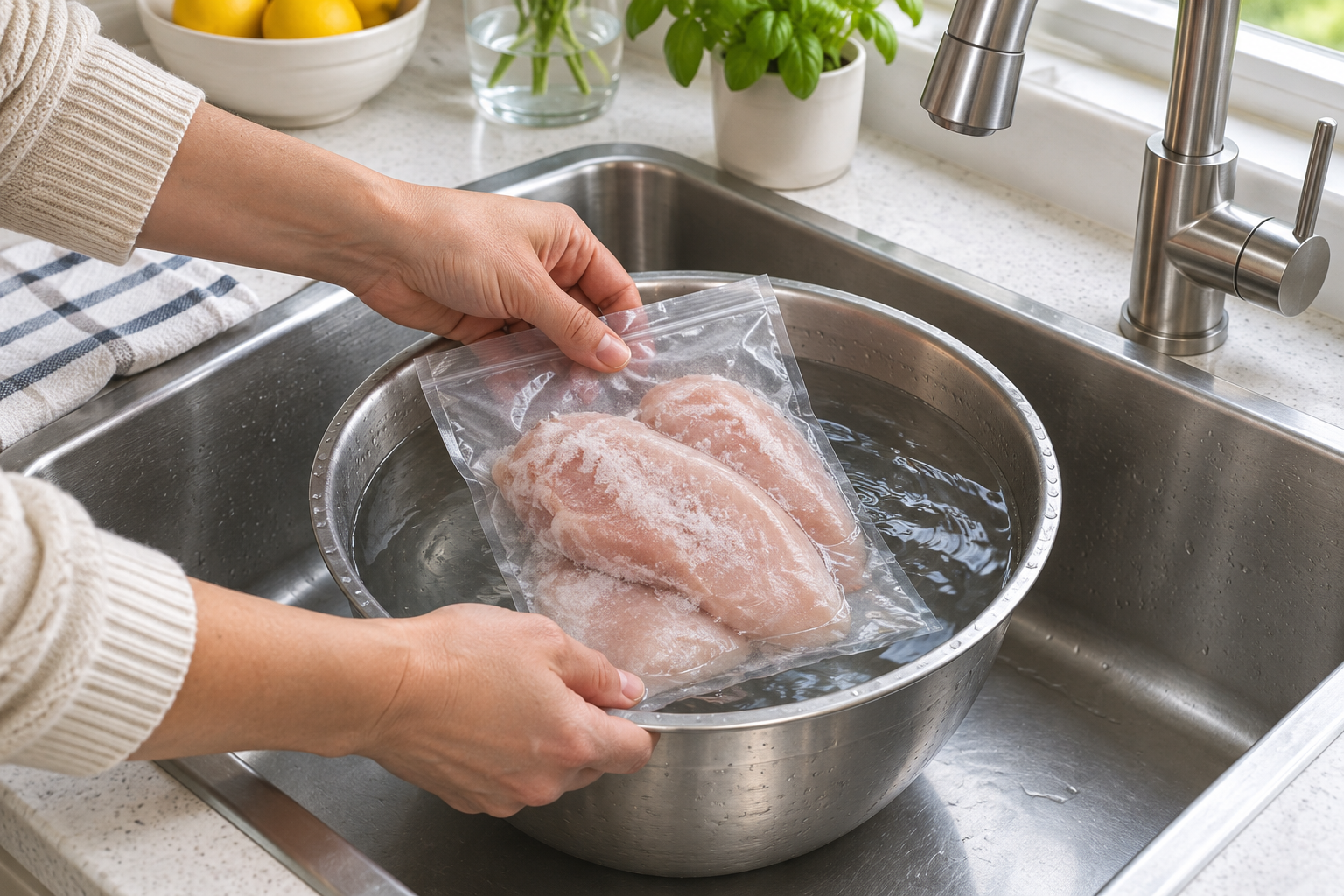
If the meat or poultry is still frozen, thaw it safely before adding it to the slow cooker. Frozen pieces take longer to heat and can slow the warming of the other ingredients. The refrigerator is a practical choice when you have time to plan ahead. If you thaw meat or poultry in the microwave or in cold water, cook it immediately afterward.
If your dinner plan depends on a frozen package you forgot to move to the fridge, adjust the plan before you switch the cooker on. Pick a meal you can start with thawed ingredients, or use a recipe designed for a different cooking method. For a commercially prepared frozen meal labeled for a slow cooker, follow the package directions.
Match the recipe to the cooker
Check the instruction booklet for the size of roast or other cut that fits your model and how full the insert should be. A recipe written for a larger cooker may need to be scaled down or swapped for one designed for yours. A moist dish like stew or chili is a sensible starting point. Use the liquid amount in the recipe, and when it calls for slow-cooking vegetables alongside meat, put the vegetables near the bottom or sides.
Use Low or High as directed by the recipe and the appliance instructions. The Warm setting is for holding food after it’s fully cooked. Once the cooker is running, leave the lid in place unless you need to stir as directed or check doneness. Opening the lid repeatedly lets heat escape and can extend cooking time.
Take the temperature before serving
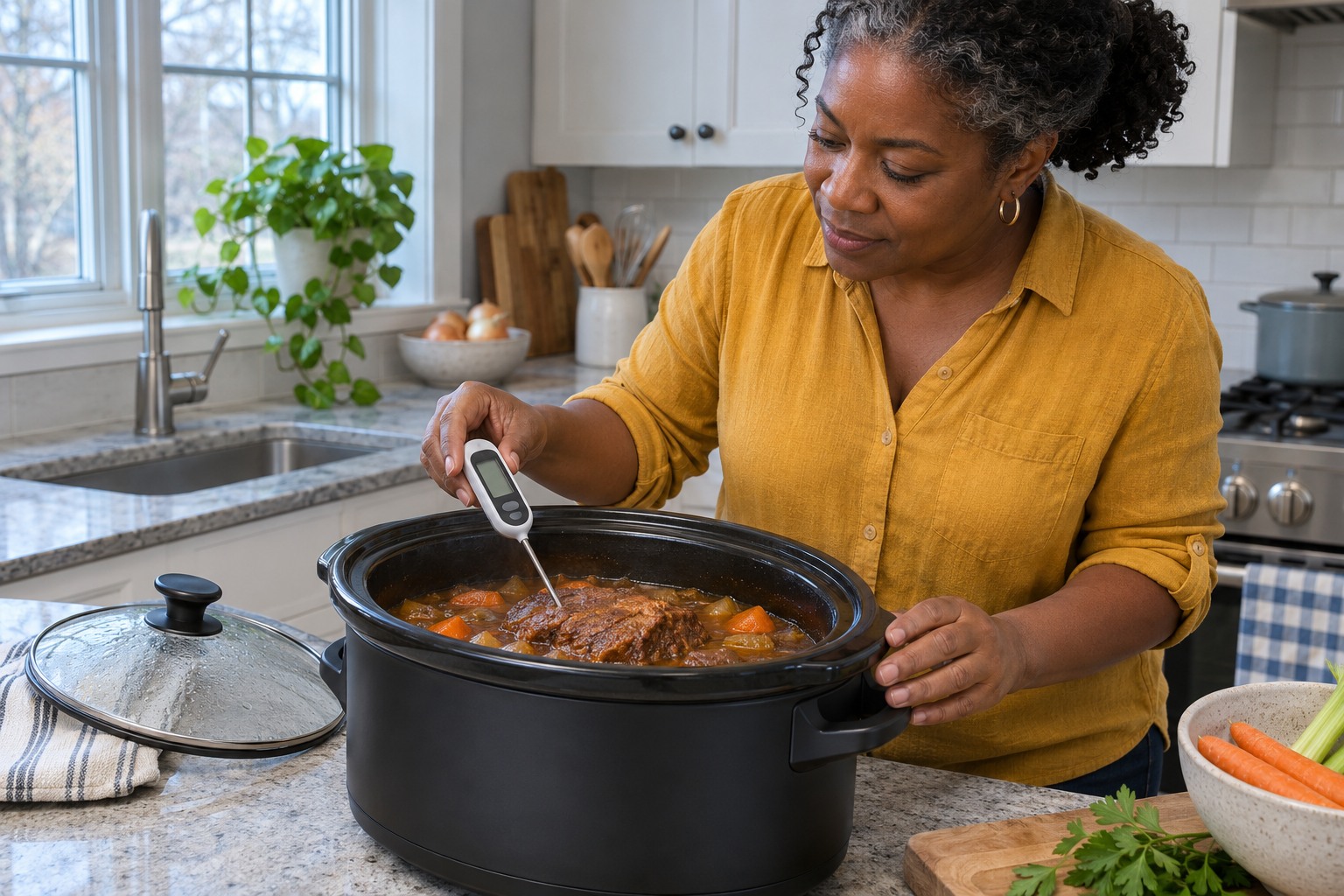
Check the thickest part of the meat and keep the thermometer tip away from bone. If the pieces differ in size, check the largest ones. Poultry needs to reach 165°F. Ground beef and other ground meats such as pork need to reach 160°F. Whole cuts of beef, pork, lamb, and veal need to reach 145°F and rest for at least three minutes before they’re carved or served. If the meat is still below its minimum, keep cooking and check again.
Tender meat, bubbling liquid, and a recipe timer can tell you a lot about how dinner is progressing. The temperature reading tells you whether the meat has reached the recommended minimum. Wash the thermometer probe after checking food, especially before using it on another dish.
Portion leftovers after the meal
Once dinner is over, divide leftovers into shallow containers and refrigerate them promptly. Put perishable food away within two hours, or within one hour if the surrounding temperature is above 90°F. Shallow containers let the food cool faster than leaving a large batch in the ceramic insert.
When you want another serving, reheat leftovers to 165°F on the stove, in the microwave, or in the oven. If you need to hold them hot for serving afterward, USDA advises that you can transfer the reheated food to a preheated slow cooker and hold it at 140°F or above.
Explore the sources
- USDA Food Safety and Inspection Service — Slow Cookers and Food Safety ↗
- FDA — Safe Food Handling ↗
- University of Minnesota Extension — Cooking food safely at home ↗
Prepared with AI assistance for True Healthy Products LLC. Sources inform this educational guide; their inclusion does not imply endorsement of our company or products. See our editorial approach.